
CFD Hedging Strategies
Master CFD hedging techniques with Exness for professional risk management and portfolio protection.
Understanding CFD Hedging Fundamentals
CFD hedging is a risk control technique that enables traders to limit losses by offsetting positions. At Exness, we provide access to a diverse selection of instruments that facilitate this strategy effectively. Our platform supports simultaneous long and short positions, allowing you to balance market exposure precisely. The key to hedging lies in opening counteracting orders to protect your portfolio from unfavorable price shifts. Fast execution speeds of approximately 0.1 seconds ensure your hedging orders are filled promptly, which is vital during rapid market changes.
| Hedging Method | Risk Reduction | Capital Requirement | Complexity Level |
|---|---|---|---|
| Direct Hedging | 80-95% | 100% of position | Low |
| Correlation Hedging | 60-80% | 50-70% of position | Medium |
| Options Hedging | 70-90% | 10-20% of position | High |
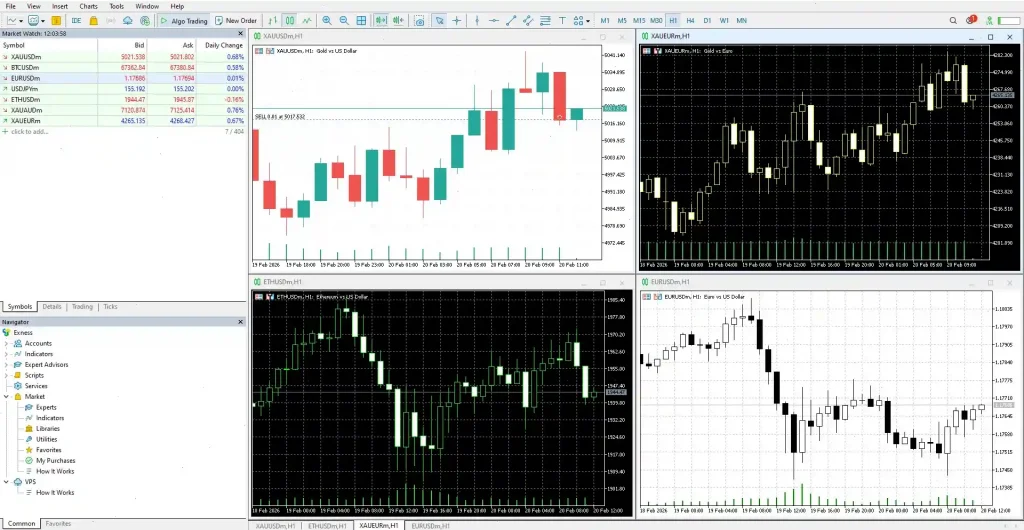
Our MetaTrader platforms support advanced order types like OCO and trailing stops, which are essential for sophisticated CFD hedging. Using these tools, traders can customize their risk exposure and manage portfolio volatility with precision.
Setting Up Your Hedging Account Structure
To begin hedging with Exness, select an account type that aligns with your trading objectives. Standard accounts offer stable spreads from 0.3 pips, while Pro accounts provide raw spreads starting at 0.0 pips with commissions per trade. Adjust leverage settings up to 1:2000 on major forex pairs, enabling efficient capital use for hedging multiple positions.
Using our position sizing calculators, you can determine the appropriate lot sizes based on risk tolerance and instrument volatility. Proper sizing prevents overexposure and ensures your hedge provides balanced protection.
Margin Requirements for Hedged Positions
When hedging identical instruments with opposing positions, our system applies margin offsets, reducing margin to zero for overlapping volumes. This margin relief optimizes capital efficiency. For hedges involving different assets or uncorrelated instruments, standard margin applies. Our platform recalculates margin requirements dynamically, factoring in current volatility and exchange rates specific to market hours.
Direct Hedging Implementation Techniques
Direct hedging on Exness is straightforward using MetaTrader’s hedging-enabled accounts. Begin by analyzing your primary position’s size and risk exposure. Use our built-in position calculator to establish the exact counter-position size needed for effective risk neutralization.
Monitor market conditions closely, especially during high-impact news events relevant to the market time zone (GST, UTC+4). Our economic calendar and integrated news feeds provide timely updates to assist in determining optimal hedge entry points.
Automated Hedging Order Setup
Our Expert Advisors (EAs) enable automatic hedge execution based on custom parameters. Set triggers such as price thresholds or volatility indicators within the EA to open hedge positions without manual intervention.
The setup steps are:
- Open MetaTrader and navigate to the Expert Advisors section
- Choose an automated hedging template
- Input your price triggers and position sizes
- Define risk management parameters, including stop-loss levels
- Activate the EA for live automated hedging
Correlation-Based Hedging Strategies
Correlation hedging involves using instruments that have inverse or low correlation to your main positions. Exness provides an updated correlation matrix covering forex pairs, indices, and commodities, essential for this approach.
For example, EUR/USD and USD/CHF maintain strong negative correlations, making them ideal candidates for this strategy. Our platform updates correlation data hourly to reflect market dynamics, ensuring you hedge with relevant instruments.
Multi-Asset Correlation Analysis
Advanced tools allow simultaneous correlation analysis across forex, indices, and commodities. These tools refresh every 15 minutes and include historical data going back 10 years, supporting robust strategy development.
| Asset Pair | 30-Day Correlation | 90-Day Correlation | Volatility Ratio |
|---|---|---|---|
| EUR/USD vs GBP/USD | +0.72 | +0.68 | 1.15 |
| USD/JPY vs USD/CHF | +0.45 | +0.52 | 0.89 |
| Gold vs USD Index | -0.78 | -0.82 | 2.34 |
Advanced Hedging with CFD Instruments
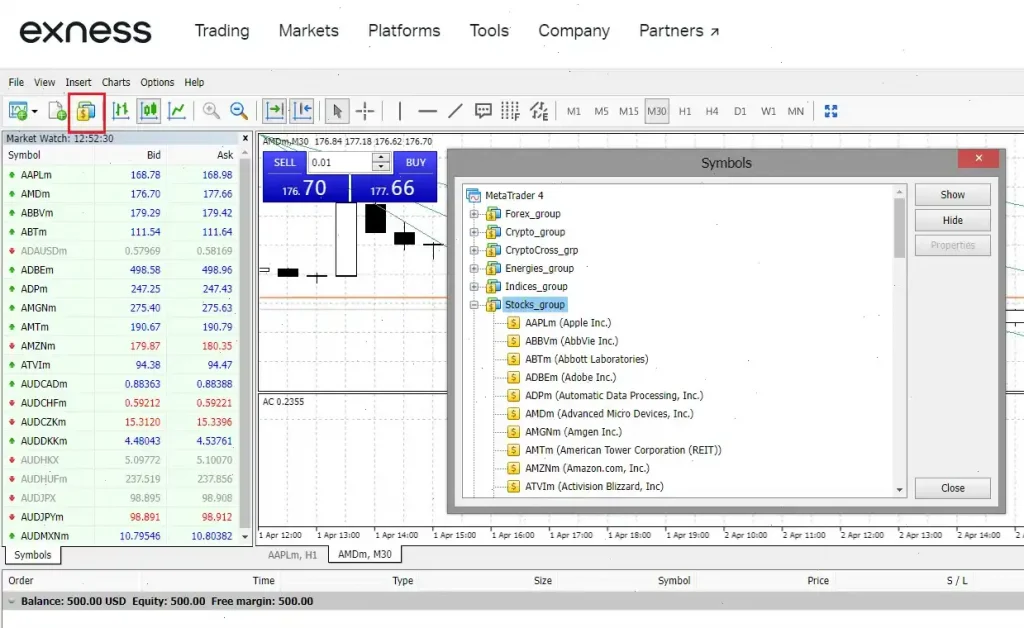
Exness offers CFDs on over 80 indices, 50 stocks, and 30 commodities, providing effective hedging options without owning the underlying assets. These CFDs track their respective markets closely, allowing precise risk management.
Stock index CFDs such as the S&P 500 or FTSE 100 allow traders to hedge equity exposure efficiently. Commodity CFDs like gold and oil offer protection against currency fluctuations and inflation risks.
Sector-Specific Hedging Applications
Different sectors demonstrate varying volatility and correlation characteristics. Technology stocks typically require larger hedge sizes due to higher price swings. Financial stocks can be hedged using interest rate-sensitive instruments.
Our sector analysis tool categorizes instruments and provides correlation data, aiding in precise hedge ratio calculations and adjustments during sector rotations.
- Identify sector exposure of your primary positions
- Select hedging instruments correlated with that sector
- Calculate hedge ratios based on sector volatility
- Monitor sector correlation changes regularly
- Adjust hedges accordingly during market cycles
Risk Management in Hedged Portfolios
Risk management extends beyond hedging individual positions to monitoring overall portfolio risk. Our platform calculates Value at Risk (VaR) for hedged portfolios using Monte Carlo simulations that factor in correlation shifts and extreme market conditions.
Heat maps visually represent risk concentrations, highlighting areas requiring hedge adjustments. Exness supports OCO orders to close both primary and hedge positions simultaneously, preventing unbalanced exposure.
Dynamic Hedge Ratio Adjustments
Market volatility changes require ongoing hedge rebalancing. Our system monitors implied volatility and suggests hedge ratio updates via real-time alerts. Delta-neutral strategies benefit from automated rebalancing features, which adjust positions to maintain balanced exposure continuously.
Technology Infrastructure for Hedging
Exness operates high-performance servers in London and New York, delivering sub-millisecond execution speeds essential for CFD hedging. Our redundant architecture ensures uninterrupted service during periods of high volatility.
We provide REST and FIX APIs for algorithmic hedging, supporting up to 1000 requests per second. Real-time tick data updates exceed 500,000 per second, enabling precise order timing.
Mobile Hedging Capabilities
Our iOS and Android apps include full hedging functionality, such as correlation analysis, automated hedge triggers, and risk monitoring. Features like OCO and trailing stops are available, complemented by biometric security for secure, fast trading from anywhere.
| Platform Feature | Desktop | Mobile App | Web Terminal |
|---|---|---|---|
| Direct Hedging | Full Support | Full Support | Full Support |
| Correlation Analysis | Advanced Tools | Basic Tools | Intermediate Tools |
| Automated Hedging | Expert Advisors | Limited Scripts | Basic Automation |
Monitoring and Optimizing Hedge Performance
Regular evaluation of hedge performance is critical for maintaining portfolio protection. Our reporting tools analyze hedge efficiency, tracking errors, and maximum drawdown comparisons between hedged and unhedged positions. These insights help refine your strategies.
Historical data storage enables backtesting of different hedging approaches under various market conditions. Optimization features suggest adjustments to hedge ratios and trigger parameters to enhance protection and cost efficiency.
| Performance Metric | Description | Application |
|---|---|---|
| Hedge Efficiency Ratio | Measures risk reduction effectiveness | Adjust hedge size |
| Tracking Error | Difference between hedge and portfolio returns | Identify strategy flaws |
| Maximum Drawdown | Largest peak-to-trough loss | Set stop-loss levels |
❓ FAQ
How do I start CFD hedging with Exness?
Open a hedging-enabled account, select instruments, and use our position calculator to set opposite trades. Utilize MetaTrader’s advanced orders for precise risk management.
What leverage levels are available for hedging?
Leverage up to 1:2000 is offered on major forex pairs, while indices have leverage up to 1:200, supporting flexible capital use for hedging.
Can I automate hedging strategies on Exness?
Yes, use Expert Advisors in MetaTrader to program hedge triggers based on price, volatility, or indicators, enabling automatic order execution.