
Swap-Free Islamic Account in Exness
Open your Exness Islamic Account for swap-free trading. Compliant with Islamic finance principles. Start halal forex trading today.
Islamic Trading: How It Works in Practice
Swap-free trading is often associated with Islamic finance, but the idea goes a bit deeper than just removing overnight fees. The core principle is simple: no interest (riba) should be involved in transactions. That’s why Islamic trading accounts are structured differently from regular ones.
Instead of charging swaps for positions held overnight, these accounts operate without interest-based adjustments. In real use, this means you can hold trades longer without seeing small daily deductions that usually come from rollover fees. For traders who keep positions open for days, that detail matters more than it seems at first glance.
Execution conditions stay largely the same. Orders are typically filled in about 0.1 seconds, and spreads can start from around 0.3 pips depending on market conditions. Leverage may go up to 1:2000, though using high leverage always increases exposure to risk, especially during volatile sessions.
Some models reference profit-and-loss sharing concepts rather than interest-based mechanisms. What matters in everyday trading is transparency—no hidden overnight costs and clear pricing from the start.
| Account Feature | Islamic Account | Standard Account |
|---|---|---|
| Overnight Swaps | Not applied | Charged daily |
| Minimum Deposit | $10 USD | $10 USD |
| Maximum Leverage | Up to 1:2000 | Up to 1:2000 |
| Execution Speed | ~0.1 seconds | ~0.1 seconds |
Getting Started with an Islamic Account
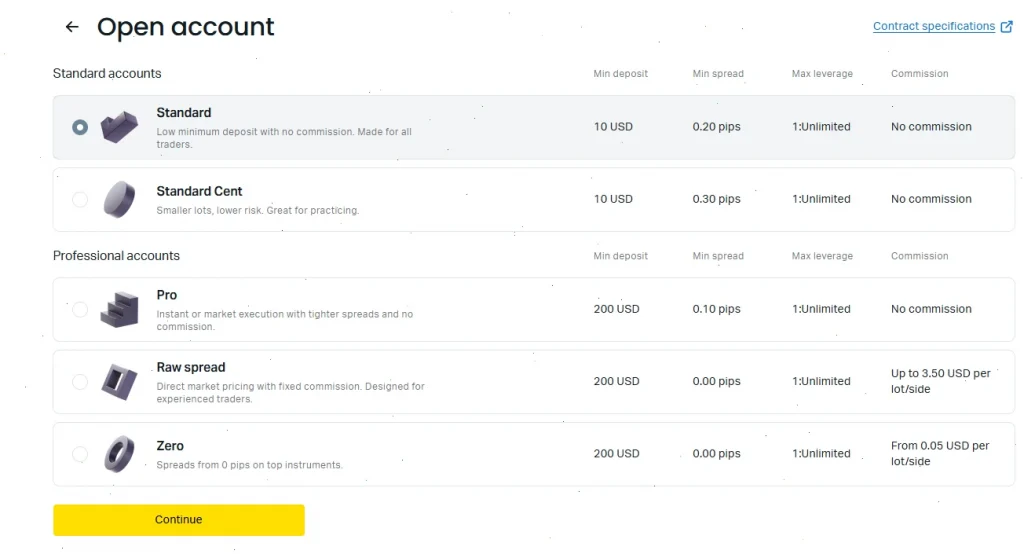
Opening an account is fairly straightforward, though there are a few steps that shouldn’t be rushed. During registration, you’ll usually see an option to choose a swap-free setup. After that, basic details like email and password are required—nothing unusual here, but using a strong password is still worth the extra minute.
Verification is part of the process. You’ll need to upload an ID and a document confirming your address. In most cases, approval comes within a day, though delays can happen if documents aren’t clear.
Typical Registration Flow
- Email confirmation via code
- Filling in personal details
- Uploading ID
- Submitting proof of address
- Answering a short trading experience form
Once verified, you get access to a dashboard where trading platforms and account settings can be configured. Choosing between MT4 and MT5 depends on preference—both support Islamic trading conditions without extra steps.
Platforms and Tools You’ll Actually Use
Most traders stick with MetaTrader platforms, and for a reason—they’re stable and familiar. After installation, logging in takes just your account credentials.
MT4 Overview
MT4 remains popular for its simplicity. It includes around 30 built-in indicators and supports automated strategies through Expert Advisors. One-click trading is especially useful when timing matters, for example during news releases.
MT5 Differences
MT5 feels slightly more advanced. It adds more order types and includes an integrated economic calendar. If you follow macroeconomic events, having that directly in the platform can save time.
Trading from Mobile
Mobile apps work smoothly for quick checks or trade management. Many traders rely on them to monitor positions rather than open new ones. Features like biometric login and push notifications make daily use easier without adding complexity.
Markets and Instruments Available
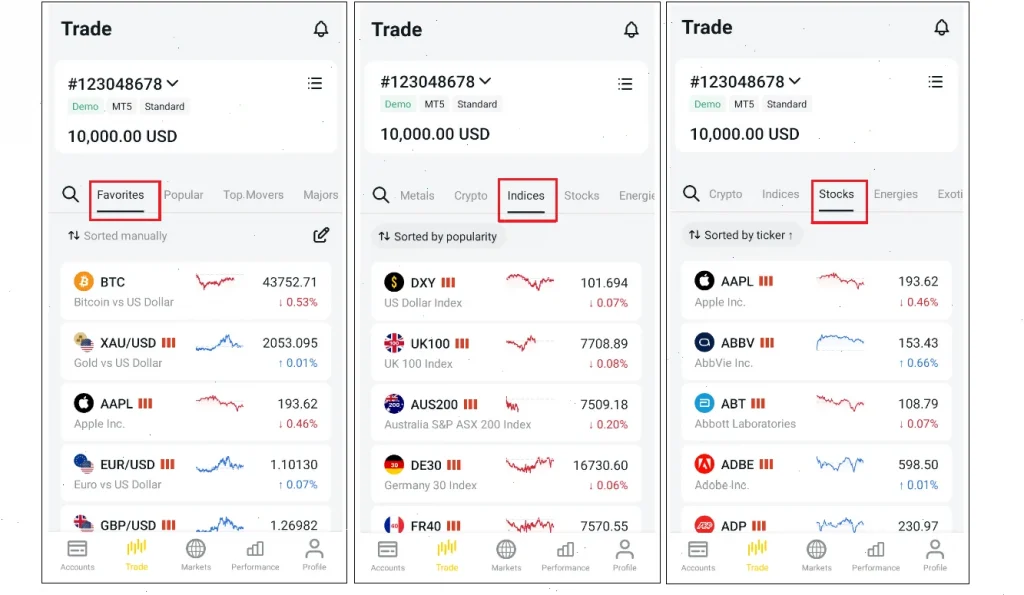
Islamic accounts typically provide access to a wide range of instruments. Forex remains the main focus, with over 100 currency pairs available in many cases.
Spreads can start from about 0.3 pips on major pairs like EUR/USD, though they may widen during volatile periods. Besides currencies, traders often look at metals or indices to diversify.
- Forex pairs (major and minor)
- Metals like gold and silver
- Energy markets such as oil
- Stock indices via CFDs
- Cryptocurrencies like Bitcoin and Ethereum
Position sizes range from micro lots (0.01) to larger volumes. This flexibility is useful—some traders prefer small experimental trades, while others scale positions gradually.
| Instrument Category | Available Options | Typical Spread | Max Leverage |
|---|---|---|---|
| Major Forex | 8 pairs | From 0.3 pips | 1:2000 |
| Minor Forex | 25+ pairs | From 0.8 pips | 1:1000 |
| Commodities | ~12 assets | From 0.5 pips | 1:400 |
| Indices | 15 markets | From 0.4 points | 1:200 |
Managing Risk Without Overcomplicating It
Risk management tools are fully available, even with swap-free conditions. Stop-loss and take-profit orders help automate decisions, which can be useful when markets move quickly.
Trailing stops are often underestimated—they adjust automatically as the market moves in your favor. It’s a simple way to protect gains without constantly watching the screen.
Position Sizing
Many traders stick to risking around 1–3% per trade. That number isn’t random—it’s based on preserving capital over time. Built-in calculators can help estimate lot size depending on stop-loss distance.
Margin Considerations
Margin requirements vary. For example:
– Forex majors may require around 0.05% margin
– Commodities often need closer to 0.25%
Higher leverage reduces margin requirements but increases potential losses. That trade-off becomes very real during sudden price movements.
Deposits and Withdrawals
Funding options usually cover both traditional and digital methods. Bank transfers, cards, and e-wallets are commonly used. Some traders prefer crypto deposits for speed, especially when moving funds frequently.
Minimum deposits often start from $10, which lowers the barrier to entry.
Withdrawal Basics
Withdrawals generally follow the same method used for deposits. Processing times vary:
- Bank transfers: 1–3 business days
- E-wallets: within 24 hours (in many cases)
Typical withdrawal steps:
- Log into your account dashboard
- Open the withdrawal section
- Select a payment method
- Enter the amount
- Confirm with security verification
Security Measures and Account Protection
Security tends to be layered rather than relying on a single feature. Two-factor authentication is one of the simplest ways to reduce risk—especially when accounts are accessed from multiple devices.
Encryption (typically 256-bit SSL) protects data during transmission. In practice, this means login credentials and transactions aren’t exposed during normal use.
Funds are usually kept separate from operational accounts. This setup helps reduce risk if something happens on the company side.
Authentication Options
- SMS verification codes
- Authenticator apps
- Biometric login on mobile devices
Additional Protection
Negative balance protection is another key feature. If markets move sharply, your account won’t go below zero—something that matters during extreme volatility.
| Security Feature | Level | Usage |
|---|---|---|
| Encryption | 256-bit | All data transfers |
| Fund Separation | Full | Client protection |
| 2FA | Multi-layer | Login security |
| Negative Balance | Enabled | Loss limitation |
Support and Learning Resources
Support availability can make a difference, especially when something doesn’t work as expected. Live chat is usually the fastest option, with responses often coming within a couple of minutes.
Email support is better suited for more detailed issues, though replies may take a few hours.
Learning Materials
Educational sections often include:
- Technical and fundamental analysis basics
- Risk management strategies
- Explanations of swap-free trading
Some traders rely on daily analysis reports, while others prefer webinars. Recorded sessions are useful if you don’t want to follow a fixed schedule.
Community Interaction
Forums and chat groups allow traders to exchange ideas. In practice, this is where many beginners pick up practical insights that aren’t always covered in formal materials.
Webinars
Live sessions sometimes include Q&A segments, which can be helpful when clarifying specific trading conditions or strategies.
| Support Feature | Availability | Response Time |
|---|---|---|
| Live Chat | 24/5 | ~2 minutes |
| 24/5 | Up to 4 hours | |
| Languages | 15+ | Immediate |
 FAQ
FAQ
What makes an Islamic trading account different?
The main difference is the absence of swap or overnight interest charges, allowing positions to remain open without accumulating interest-based fees.
How long does account verification take?
In most cases, verification is completed within 24 hours, provided documents are clear and valid.
Are MetaTrader platforms supported?
Yes, both MT4 and MT5 work without any additional setup for swap-free accounts.
What funding options are typically available?
Common methods include bank transfers, cards, e-wallets, and sometimes cryptocurrencies.
Is there protection against losses exceeding the balance?
Yes, negative balance protection ensures that losses cannot exceed the available funds in the account.