
What Is Leverage in Exness?
Access up to 1:2000 leverage on Exness. Trade forex and CFDs with competitive spreads, instant execution, and professional tools.
How Leverage Works on Exness
Leverage on Exness allows traders to control a larger position than their actual balance would normally permit. Depending on the account type, ratios can range from 1:1 up to 1:2000. That sounds aggressive—and it can be—but the platform doesn’t treat leverage as a fixed number. It shifts dynamically based on account equity, open positions, and current market conditions.
In practice, many traders notice that leverage tightens automatically when exposure grows or volatility spikes. This is part of an internal risk system that recalculates limits in near real time. It helps prevent situations where a small price move could wipe out an account too quickly.
Another detail worth noting: negative balance protection is built in. If something goes wrong during fast market moves, losses are capped at the deposited amount. That doesn’t eliminate risk, but it does prevent debt.
| Account Type | Forex Leverage | CFD Leverage | Crypto Leverage |
|---|---|---|---|
| Standard | up to 1:2000 | up to 1:400 | up to 1:2 |
| Pro | up to 1:2000 | up to 1:200 | up to 1:2 |
| Zero | up to 1:2000 | up to 1:400 | up to 1:2 |
| Raw Spread | up to 1:2000 | up to 1:200 | up to 1:2 |
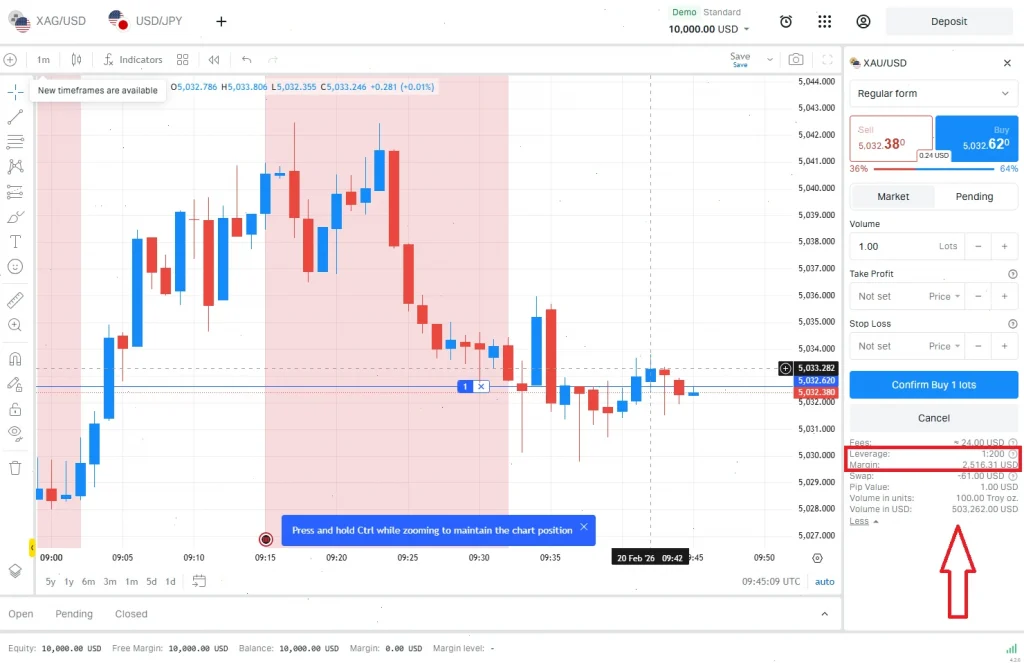
Changing Leverage in Your Account
Leverage settings can be adjusted directly from the account dashboard. The process is fairly quick: choose the trading account, open the leverage settings, and confirm the update using a one-time code sent to your phone. The change applies immediately, but only to new trades.
Open positions keep their original leverage unless modified manually. This detail often gets overlooked, and it can lead to confusion when risk levels don’t match expectations after a change.
How It Connects to Trading Platforms
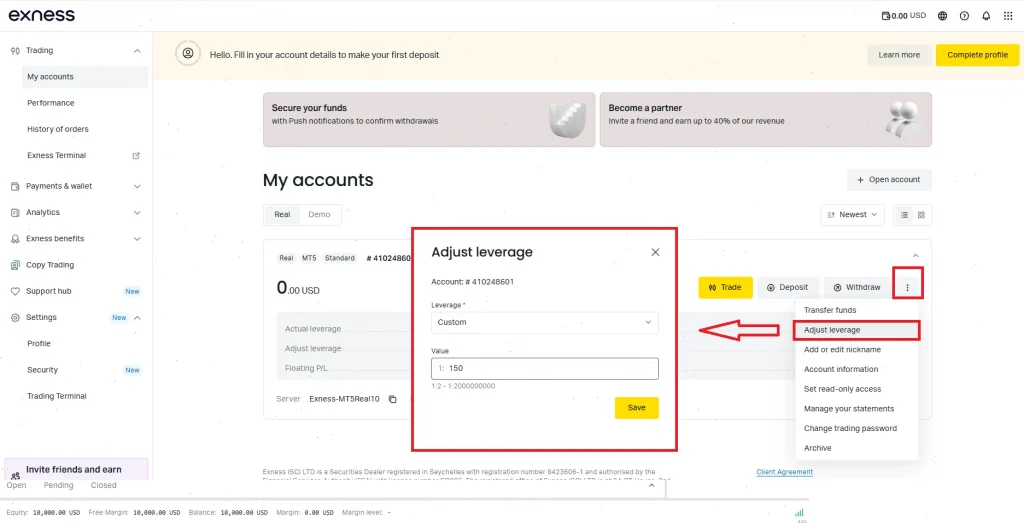
Once updated, leverage settings sync across platforms like MT4, MT5, and the mobile app within seconds. Inside the terminal, margin requirements for each instrument can be checked under symbol specifications. The formula behind it is straightforward, but the platform handles calculations automatically as prices move.
In real use, this means traders don’t need to manually recalculate margin every time the market ticks—but they still need to understand how fast requirements can change when leverage is high.
Risk Side of High Leverage
Leverage can amplify both profits and losses. With ratios above 1:100, even small price movements start to matter more than expected. That’s why the platform includes several built-in safeguards.
A stop-out level typically activates around 20% margin, closing positions automatically to prevent further losses. Before that, margin call warnings appear when levels drop near 60%. These alerts arrive through multiple channels, so they’re hard to miss—unless ignored.
- Margin warnings when account risk increases
- Automatic closure of positions at critical levels
- Negative balance reset within 24 hours
- Temporary leverage reductions during volatility spikes
- Position size limits linked to account equity
Some traders stick to a simple rule: risk no more than 1–2% of their balance per trade. It sounds conservative, but with high leverage, it often keeps accounts alive longer.
Margin Call Behavior
When equity drops below required thresholds, the system starts closing trades—usually the least profitable ones first. This happens in quick cycles, sometimes every few seconds. There’s usually a short window to react, but in fast markets, that window can feel much shorter.
How Margin Is Calculated
Margin on Exness follows a standard structure: it depends on lot size, contract size, market price, and chosen leverage. The platform recalculates this continuously as prices change.
For traders using different base currencies, conversion happens automatically using live exchange rates. This avoids manual calculations but introduces slight variations depending on rate updates.
Currency and Instrument Differences
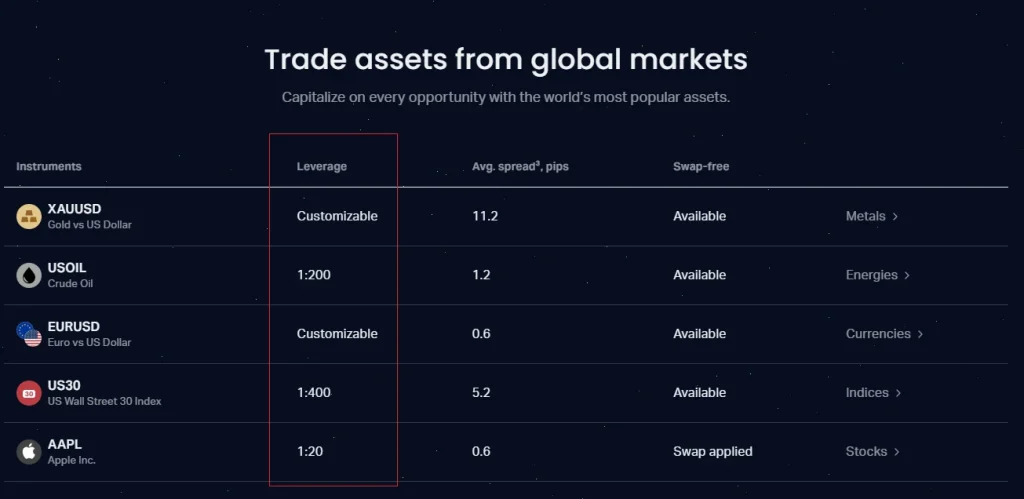
Not all instruments are treated equally. Exotic pairs and less liquid markets usually require higher margin—sometimes around 1.5× compared to major pairs. This reflects their higher volatility and wider spreads.
| Base Currency | Major Pairs | Cross Pairs | Exotic Pairs |
|---|---|---|---|
| USD | 1.0x | ~1.1x | ~1.5x |
| EUR | ~1.0x | ~1.1x | ~1.5x |
| GBP | ~1.0x | ~1.1x | ~1.5x |
| Other | ~1.1–1.2x | ~1.2x | ~1.6x |
Tools That Interact with Leverage
Leverage doesn’t operate in isolation—it’s tied into other platform tools. For example, during major economic announcements, leverage on certain instruments may be reduced temporarily. This usually happens shortly before the event and returns to normal afterward.
Execution speed is another factor. Orders are processed in milliseconds, which matters when leverage is high and price changes quickly. Even a slight delay can affect entry or exit levels.
Automated and Copy Trading
Algorithmic trading systems can adjust position sizes based on leverage automatically. In copy trading, positions are scaled proportionally, meaning leverage settings directly influence how trades are mirrored. This is useful, but also risky if not monitored closely.
Account Types and Restrictions
Leverage access depends partly on account classification. Retail accounts usually have stricter limits and built-in protections. Professional accounts can unlock higher ratios, but they come with fewer safeguards.
Verification is required either way. Identity checks and financial questionnaires help determine which category applies. In some cases, increasing leverage above certain thresholds may trigger a waiting period before activation.
Using Leverage on Mobile
The mobile app provides full control over leverage settings, including real-time monitoring of margin and risk levels. Changes sync quickly across devices, so switching between phone and desktop doesn’t disrupt trading.
- Instant alerts for margin and equity changes
- Biometric confirmation for higher leverage adjustments
- Quick position closing in volatile markets
- Custom notifications per instrument
- Offline tracking with automatic sync later
Cross-Device Consistency
Settings, open trades, and pending orders remain consistent across platforms. This matters more than it seems—especially for traders who manage positions throughout the day from different devices.
| Platform | Leverage Control | Sync Speed | Mobile Support |
|---|---|---|---|
| MT4 | Full | Yes | Limited |
| MT5 | Full | Yes | Limited |
| Web Trader | Full | Yes | Yes |
| Mobile App | Full | Yes | Native |
Leverage and Market Conditions
Leverage isn’t constant throughout the trading week. It often changes depending on liquidity, trading sessions, and upcoming events. During quieter periods, higher leverage may be available. Around major announcements or low-liquidity conditions, it’s usually reduced.
Weekend gaps are another factor. Before markets close, leverage on certain instruments may be lowered to reduce exposure to sudden price jumps when trading resumes.
Some strategies—like carry trading—rely on both leverage and swap rates. In those cases, even small differences in overnight costs can impact long-term results.
 FAQ
FAQ
What is the maximum leverage available?
For major currency pairs, leverage can go up to 1:2000, though actual availability depends on account conditions and exposure.
Can leverage be changed anytime?
Yes, settings can be updated through the account dashboard, with confirmation required. Changes apply to new trades only.
Is negative balance possible?
No, losses are limited to the deposited amount due to built-in protection mechanisms.
Does mobile trading support leverage control?
Yes, the mobile app allows full management, including monitoring and adjustments.
How does the platform reduce risk?
It uses margin calls, stop-out levels, and dynamic leverage adjustments to limit exposure during unstable conditions.