
Browser-Based Exness Web Terminal
Access Exness WebTerminal for instant trading without downloads. Execute trades, analyze markets, and manage positions directly from your browser in Trading.
Platform Overview and How It Works in Practice
The :contentReference[oaicite:0]{index=0} WebTerminal runs directly in a browser, so there’s nothing to install or update manually. It opens on most modern browsers and tends to load quickly even on mid-range laptops. In everyday use, the platform feels lightweight — charts react without noticeable lag, and switching between instruments doesn’t freeze the interface, which matters during volatile sessions.
Execution speed averages around 0.18 seconds. That number might sound abstract, but in fast-moving markets it can mean entering a trade closer to the intended price rather than chasing it. The platform supports over 200 instruments, including currency pairs, commodities, and indices, which is enough for most trading strategies without feeling overwhelming.
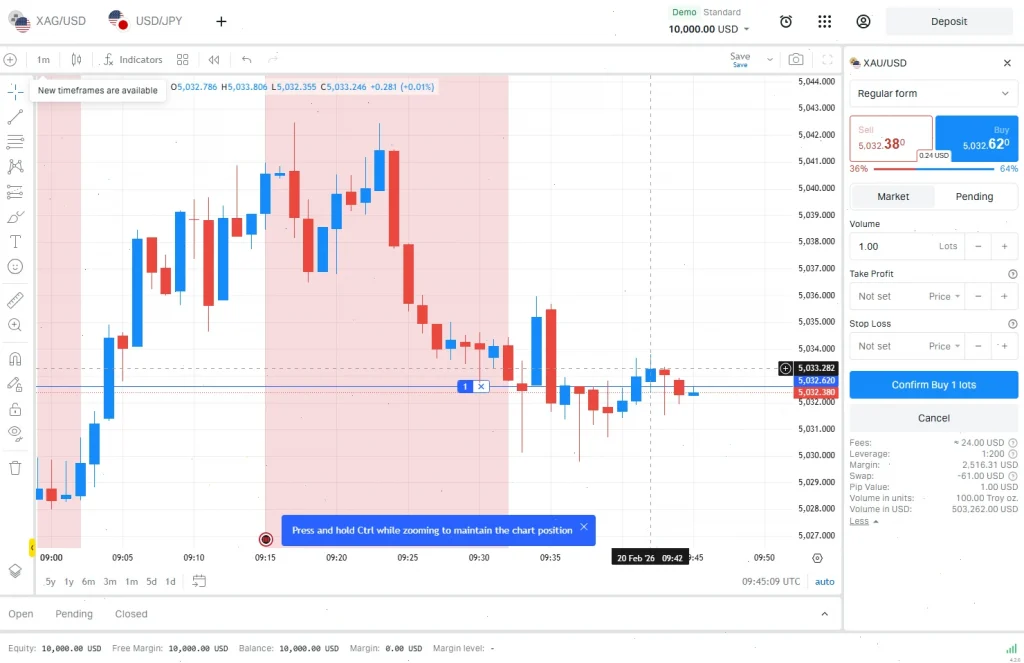
Hardware requirements stay reasonable: 4GB of RAM and a stable connection are typically sufficient. On slower machines, performance depends more on how many charts and indicators are open at once. The layout scales from small laptop screens to larger monitors, so it doesn’t feel cramped or stretched.
| Feature | Details | What it means in use |
|---|---|---|
| Execution Speed | ~0.178 seconds | Faster order placement during volatility |
| Instruments | 200+ assets | Enough variety without clutter |
| Browser Access | Modern browsers | No installation or updates needed |
| Indicators | 80+ | Suitable for both simple and complex setups |
Logging In and Keeping Access Stable
Access starts through your personal dashboard. Once logged in, the WebTerminal opens in a separate tab and restores your previous layout automatically. That small detail saves time — especially if you regularly switch devices.
Security is handled through standard login credentials, with optional two-factor authentication via apps or SMS. In practice, most active traders enable 2FA because account access is tied directly to funds and open positions.
What the login process looks like
After entering your credentials, the platform typically loads within a few seconds. If multiple accounts are linked, you can switch between them without logging out. This is useful when separating strategies or testing different risk levels.
Small tweaks that improve stability
Browser settings matter more than expected. Disabling aggressive extensions and keeping cache clean helps avoid random slowdowns. Many users end up running the platform in a separate browser profile to keep it isolated from everyday browsing.
Interface Layout and Trading Workflow
The layout is divided into familiar sections: market watch, charts, order window, and account summary. It’s not complicated, but it takes a bit of time to arrange everything in a way that feels natural.
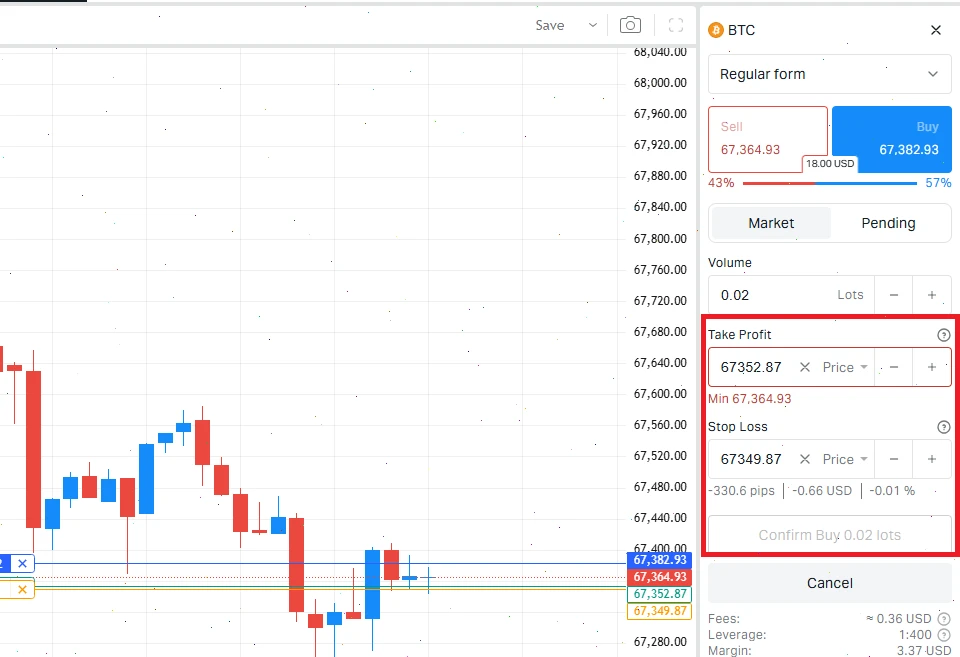
Charts can run simultaneously — up to 16 at once — though most users stick to fewer to keep things readable. Switching between timeframes is instant, which helps when checking both short-term and broader trends.
Placing and managing trades
Orders are placed directly from charts or the order panel. Lot sizes start from 0.01, making it accessible for smaller balances. Stop loss and take profit levels can be adjusted even after opening a trade, which is often used when the market starts moving in your favor.
Trailing stops are available too. In practice, they’re useful in trending markets but can trigger early in choppy conditions — something traders usually learn after a few attempts.
Working with charts
The charting system is powered by :contentReference[oaicite:1]{index=1}, so most tools feel familiar. Indicators like RSI or moving averages can be layered without slowing things down too much. Layouts are saved automatically, so once you find a setup that works, it stays consistent.
Account Options and Trading Conditions
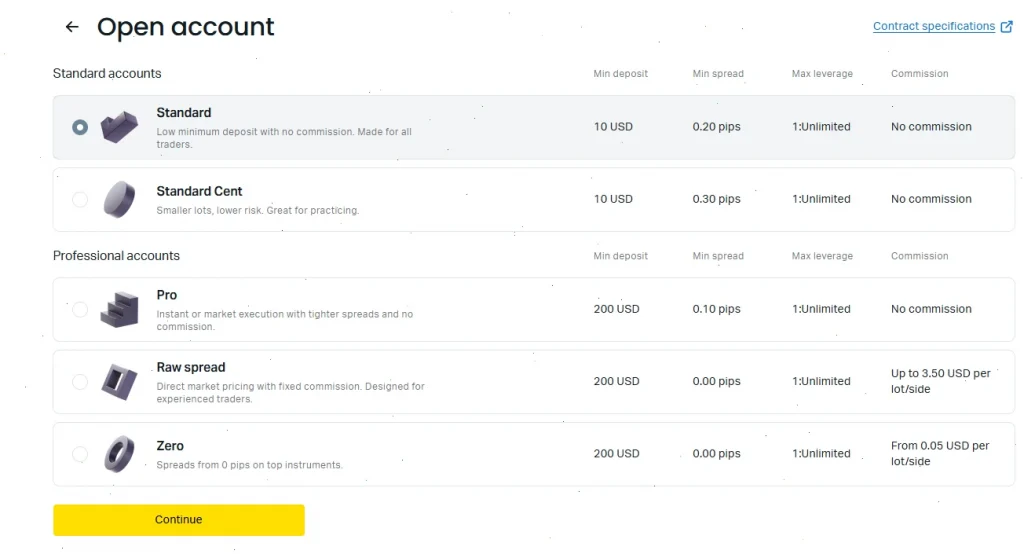
Different account types mainly affect spreads, commissions, and minimum deposits. The choice usually depends on how often you trade and how sensitive your strategy is to costs.
- Standard — low entry point, spreads from 0.3 pips, no commission
- Pro — tighter spreads from 0.1 pips, commission per lot
- Raw Spread — near-zero spreads with fixed commission
- Zero — commission-free structure with slightly wider spreads
Leverage can go quite high (up to 1:2000 in some cases), but it adjusts depending on balance and open positions. While high leverage increases exposure, it also raises the risk of rapid losses — something many beginners underestimate at first.
| Account | Deposit | Spread | Commission | Leverage |
|---|---|---|---|---|
| Standard | $10 | From 0.3 pips | None | Up to 1:2000 |
| Pro | $200 | From 0.1 pips | $3.5/lot | Up to 1:2000 |
| Raw Spread | $200 | From 0.0 pips | $3.5/lot | Up to 1:2000 |
| Zero | $1000 | From 0.3 pips | None | Up to 1:2000 |
Deposits and Withdrawals in Real Use
Funding options include bank transfers, cards, e-wallets, and crypto. In everyday use, most traders lean toward e-wallets or cards because processing is faster.
Deposits via electronic systems are usually instant. Bank transfers take longer — sometimes a couple of days — which can be inconvenient if timing matters.
Payments and processing
Card payments use additional authentication steps, which adds a layer of security but also a bit of friction. E-wallets tend to be smoother and quicker, especially for smaller amounts.
Withdrawals
Withdrawals follow the same route as deposits. This is standard due to compliance rules. Processing speed varies — instant for some methods, a few days for bank transfers.
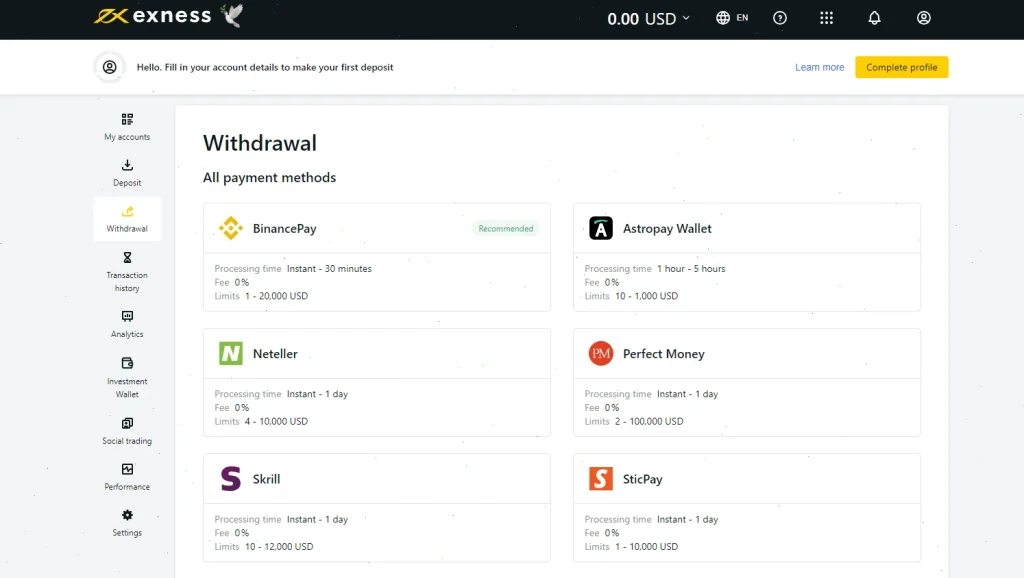
Verification is required before the first withdrawal. It’s usually completed within a day, but delays can happen if documents aren’t clear.
Risk Controls and Security Measures
Security is handled through encryption and session controls. Automatic logout after inactivity is a small but important feature — especially on shared devices.
Negative balance protection is built in, meaning losses won’t exceed the account balance. While that limits extreme downside, it doesn’t reduce the likelihood of losing the deposited funds during volatile periods.
- Encrypted data transmission
- Two-factor authentication
- Automatic session timeout
- Segregation of client funds
- Real-time monitoring systems
Margin alerts appear before positions get too risky. In practice, they act as a warning rather than protection — decisions still depend on the trader.
Analysis Tools and Market Insight
The platform includes a wide set of indicators and an economic calendar. Data updates quickly, which helps when tracking reactions to news events.
Custom indicators can be built using :contentReference[oaicite:2]{index=2}. This is more relevant for experienced users, but even basic scripts can automate repetitive checks.
Sentiment data
Client sentiment shows how many traders are buying or selling a specific asset. It updates regularly and can hint at overcrowded trades. Still, it’s more of a reference point than a signal on its own.
| Tool | Update | Use case |
|---|---|---|
| Indicators | Real-time | Technical analysis |
| Economic Calendar | Daily | Event tracking |
| Sentiment | ~15 min | Market positioning insight |
| Alerts | Instant | Price monitoring |
Using Web and Mobile Together
The WebTerminal syncs with mobile apps, so positions and charts stay updated across devices. Many traders check markets on mobile and execute trades later on a larger screen.
Layouts and watchlists transfer automatically. This consistency helps avoid mistakes, especially when switching devices during active trades.
| Feature | How it works |
|---|---|
| Sync | Real-time across devices |
| Interface | Adapts to screen size |
| Storage | Cloud-based settings |
| Notifications | Push, email, SMS |
| History | Up to 10 years |
 FAQ
FAQ
How do I access the WebTerminal?
Log in through your account dashboard and open the platform in your browser. It loads your saved workspace automatically.
Can I trade from different devices?
Yes, positions and settings sync across web and mobile, so switching devices doesn’t interrupt your workflow.
What payment methods are supported?
Bank transfers, cards, e-wallets, and cryptocurrencies are available, with processing times depending on the method.
Is the platform secure?
It uses encryption, two-factor authentication, and session controls to reduce unauthorized access risks.
Are there risks involved?
Yes. Trading with leverage can amplify both gains and losses. Many traders experience losses, especially without a clear risk management approach.