
Exness Copy Trading App download
Download Exness Copy Trading App in Trading. Follow expert traders, copy strategies automatically, manage risk settings with our mobile platform.
How Copy Trading Works in Exness
Copy trading has changed how people approach financial markets. Instead of building every trade from scratch, users can connect their account to someone else’s strategy and mirror it automatically. In practice, this means positions are opened and closed without manual input — you’re essentially following along in real time.
The mobile app (available for both Android and iOS) handles this process quietly in the background. Once connected to a strategy provider, trades are transmitted and executed within milliseconds. That speed matters: even small delays can affect entry price, especially during fast market moves.
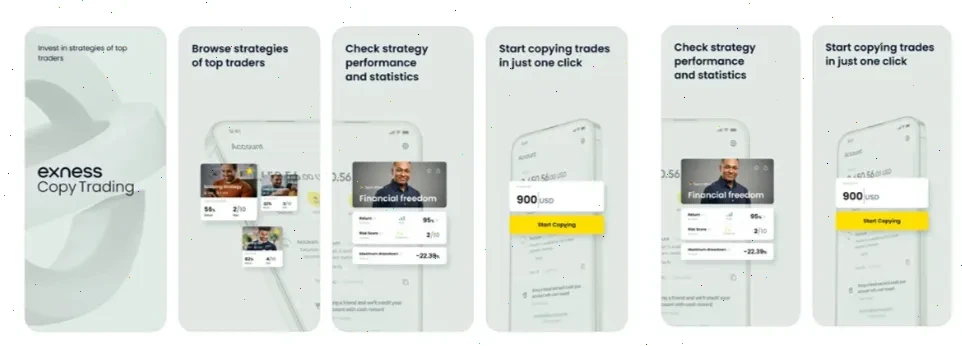
The system integrates with platforms like MT4 and MT5, so users still operate within a familiar trading environment. More than 200 instruments are available — including currency pairs, commodities, indices, and crypto CFDs. That variety allows diversification, though it also requires careful risk control.
One detail many overlook: copied trades are scaled proportionally. If your account is smaller than the strategy provider’s, position sizes are adjusted automatically. This keeps risk somewhat aligned, though it doesn’t eliminate it.
| Feature | Typical Value | What It Means in Practice |
|---|---|---|
| Execution Speed | <100 ms | Lower chance of price differences |
| Available Instruments | 200+ | Flexible portfolio building |
| Platform Support | MT4 / MT5 | Standard trading tools |
| Risk Controls | Multiple settings | Adjustable exposure levels |
Getting the App on Your Device
Installation is straightforward and doesn’t take long. The app is lightweight (around 50MB), so even mid-range devices handle it without issues. Most users download it directly from their device’s app store or via a QR code.
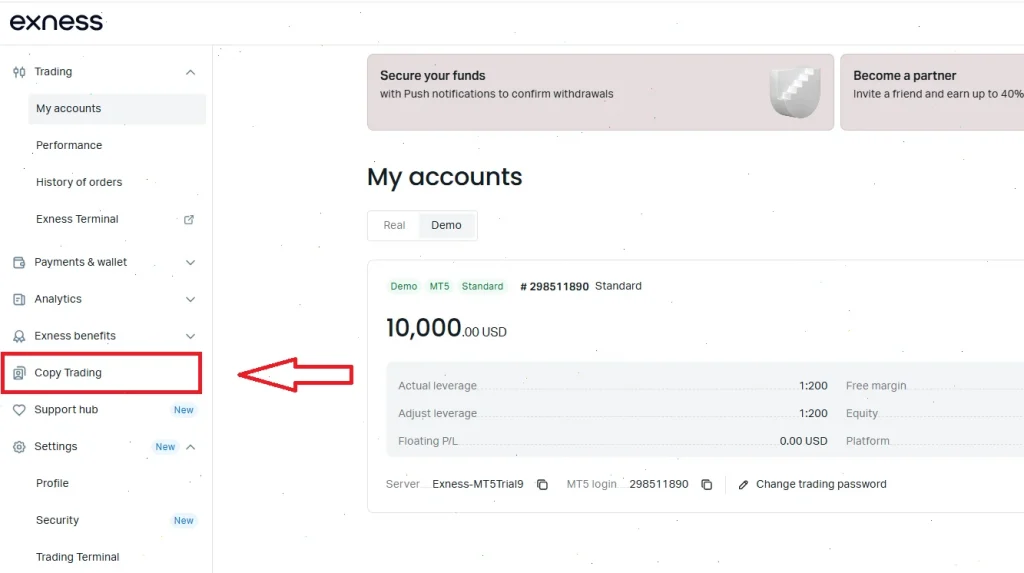
After installation, you’ll be asked to configure basic settings — time zone, currency display, and account preferences. These are applied automatically based on your device, but can be changed later.
Biometric login (fingerprint or face recognition) is supported on most modern devices. It’s not essential, but many people enable it for convenience rather than typing passwords repeatedly.
Device Performance and Stability
The app doesn’t demand high-end hardware, but there are a few practical limits. Devices with at least 2GB of RAM tend to run it smoothly. Below that, users sometimes report slower updates or delayed notifications.
A stable internet connection is more important than raw device power. Even a 1 Mbps connection works, but fluctuations can interrupt trade copying. This is why many traders prefer Wi-Fi for setup and monitoring, switching to mobile data only when needed.
Another small but important detail: battery optimization settings. Some devices restrict background activity, which can interfere with trade synchronization. Disabling power-saving mode for the app usually solves this.
Account Setup and Verification
Creating an account takes a few minutes. You’ll need an email, phone number, and a password that meets basic security rules. After that, verification becomes the main step.
Identity checks require uploading a clear photo of an ID document. Most rejections happen due to poor image quality — glare, shadows, or cropped edges. It sounds minor, but it’s one of the most common delays.
Proof of address is also requested. Typically, a recent bill or bank statement works, as long as it matches your account details. Processing usually takes less than a day, though it can vary slightly.
Once verified, deposits can be made through several methods:
- Bank transfers (a few business days)
- Cards (usually instant)
- E-wallets like Skrill or Neteller
- Cryptocurrency (processing depends on network load)
- Other regional payment tools
Minimum deposits start low — around $10 for standard accounts. That makes it accessible, though smaller balances also mean smaller returns and tighter risk margins.
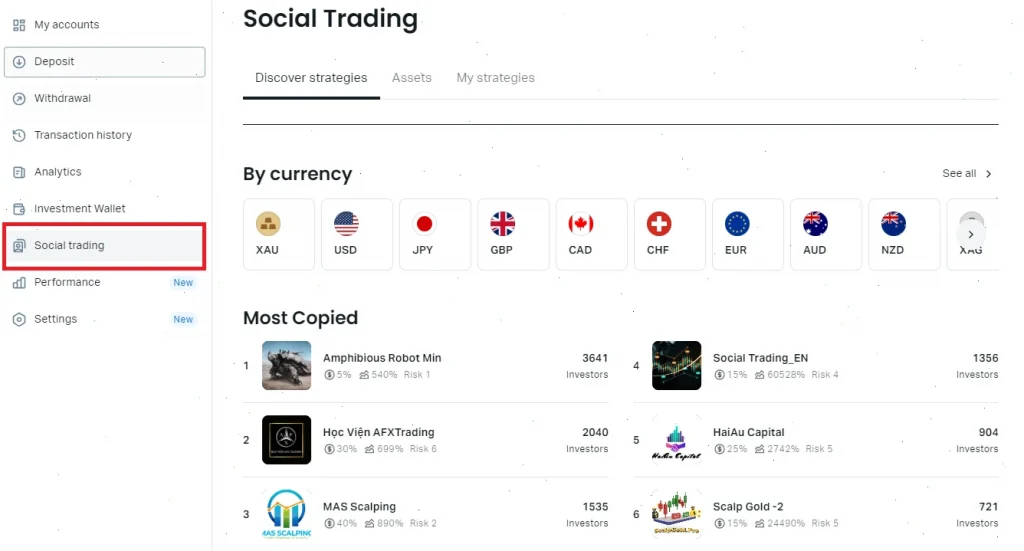
Adjusting Your Trading Profile
Before copying any strategy, it’s worth spending a few minutes in settings. This is where you define how aggressive or cautious your approach will be.
For example, some users cap daily losses at 2–5% of their balance. Others allow more flexibility, sometimes up to 20%. The difference is significant — higher limits can increase potential returns, but also accelerate losses.
Notifications are another area people tweak differently. Some prefer real-time alerts for every trade, while others only check daily summaries. There’s no universal approach — it depends on how involved you want to be.
Choosing a Strategy Provider
There are hundreds of strategy providers available, each with their own style. Some focus on short-term trades (scalping), others hold positions for days or weeks. The choice isn’t just about returns — consistency matters more than it seems at first.
Metrics like drawdown, win rate, and average trade duration help paint a clearer picture. For example, a strategy showing 10% monthly returns with low drawdown tends to behave very differently from one hitting 20% with frequent sharp losses.
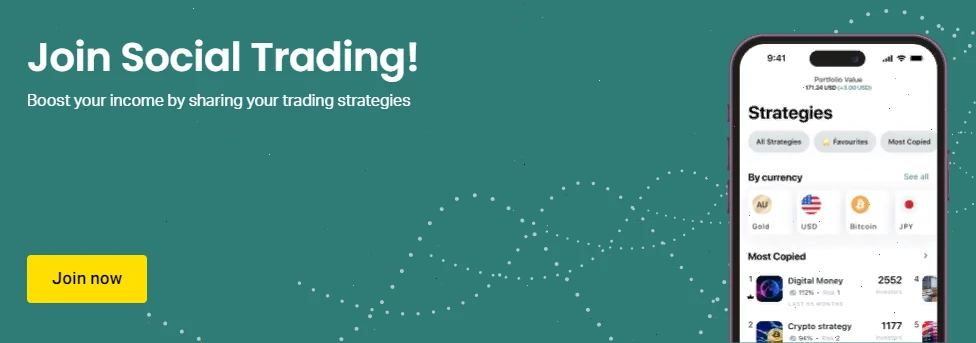
Many traders also look at how long a strategy has been active. A track record of at least 6–12 months is often considered more reliable than short-term performance spikes.
| Tier | Track Record | Typical Monthly Return | Drawdown Range |
|---|---|---|---|
| Experienced | 24+ months | 8–15% | <10% |
| Mid-level | 12 months | 5–12% | <20% |
| Newer | 6 months | 3–10% | <30% |
| Recently started | 3 months | Unstable | Up to 50% |
Risk Settings and Trade Copying
Once a strategy is selected, you decide how much of your balance to allocate. This is where many mistakes happen — allocating too much to a single provider increases exposure significantly.
A common approach is spreading funds across multiple strategies. Keeping each allocation under 20–25% of total balance helps reduce dependency on one performance track.
The risk multiplier controls trade size. A value of 1.0 mirrors trades proportionally, while 0.5 cuts exposure in half. Increasing it above 1.0 amplifies both gains and losses — something beginners often underestimate.
- Limit number of open trades per strategy
- Set daily loss caps
- Define instrument exposure
- Use stop-loss protection
- Enable emergency stop if needed
In practice, these controls act like guardrails. They don’t eliminate risk, but they help prevent a single bad sequence from wiping out the account.
Tracking Performance in Real Time
The dashboard updates continuously, showing current profit/loss, open trades, and overall balance. During active market hours, changes can happen quickly — sometimes within seconds.
Historical data is also available, covering everything from daily results to long-term performance. This helps identify patterns, like whether a strategy performs better in trending or volatile markets.
| Metric | Update Speed | Usage |
|---|---|---|
| Live P&L | ~1 second | Immediate tracking |
| Open Positions | Few seconds | Monitor exposure |
| Trade History | Instant | Review decisions |
| Reports | Daily | Long-term analysis |
Troubleshooting and Support
Occasionally, things don’t work perfectly. Delays in trade execution can happen during volatile periods, and synchronization issues sometimes appear if the connection drops.
Most minor problems are solved by restarting the app or clearing cached data. It’s simple, but surprisingly effective.
Support is available through chat and email. Response times are usually quick for basic questions, though more technical issues may take longer to resolve.
| Issue | Likely Cause | What Helps |
|---|---|---|
| Connection errors | Unstable network | Switch networks |
| Execution delay | Market volatility | Wait or monitor |
| Sync issues | App cache | Restart / clear cache |
| General support | Various | Contact support |
 FAQ
FAQ
How do I start copy trading?
Install the app, verify your account, choose a strategy, and allocate funds. Trades will begin copying automatically once everything is set.
What can I trade through copy trading?
A wide range of instruments, including forex, commodities, indices, and crypto CFDs.
Can I control my risk?
Yes. You can adjust allocation, stop-loss limits, and trade size multipliers at any time.
Does the app run on older devices?
It works on most modern smartphones, though better performance is seen on devices with at least 2GB RAM.
What if something goes wrong?
Basic issues can often be fixed within the app. For anything more complex, support channels are available.