
Exness App for iOS
Download Exness iOS app for Trading. Access forex markets, manage positions, execute trades on mobile. Complete setup guide included.
Exness iOS App: What You Actually Get
The Exness iOS application gives direct access to forex and CFD markets from a phone or tablet, without needing a desktop terminal. It’s built for active trading — meaning real-time quotes, fast order execution, and continuous monitoring of positions.
Inside the app, users can work with more than 200 instruments, including currency pairs, metals, indices, and cryptocurrencies. In practice, this means you’re not limited to just forex — switching between assets takes only a few taps.
The installation package is relatively light (around 85MB), but the app stores chart data and history locally, so actual usage grows over time. Security is handled through encrypted connections, and login can be protected with Face ID or Touch ID, which many traders find quicker than typing passwords repeatedly.
| Feature | Details | Notes |
|---|---|---|
| Minimum iOS | 12.0+ | Works on most modern devices |
| App Size | ~85MB | Extra space needed for data |
| Languages | 15 options | English included |
| Accounts | Standard, Pro, Raw Spread | Verification required |
Device Compatibility and Performance
The app runs smoothly on devices starting from iPhone 6s and similar-generation tablets. While it technically works on older hardware, performance depends on RAM and processor speed. Newer devices handle chart rendering and indicator loading more comfortably.
A stable internet connection is important. Around 1 Mbps is enough for basic trading, but during volatile market conditions, slower connections may delay price updates or execution. The app adjusts data usage automatically, which helps avoid sudden freezes.
From experience, it’s better to keep at least 200MB of free space. Charts, cached prices, and logs accumulate quickly, especially if you trade frequently or switch between multiple instruments.
Installing the App from the App Store
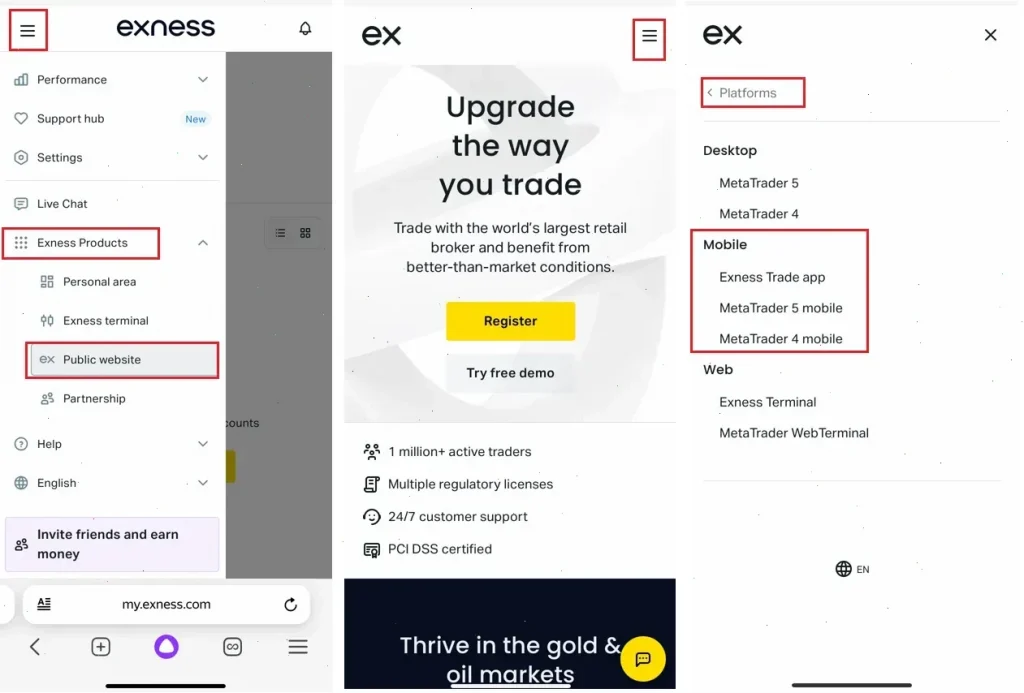
Downloading the Exness app follows the usual process. Open the App Store, search for “Exness,” and make sure the developer name matches the official listing. This step matters — unofficial copies do appear from time to time.
Tap “Get,” confirm via Face ID, Touch ID, or password, and wait a couple of minutes. On a stable connection, installation rarely takes long.
If something goes wrong — which happens occasionally — it’s usually related to storage or system version. A quick restart or checking available space often solves it.
- Free at least 200MB before installing
- Check your iOS version (12.0 or higher)
- Use Wi-Fi or a stable data connection
- Enable auto-updates to avoid missing fixes
Creating an Account and Logging In
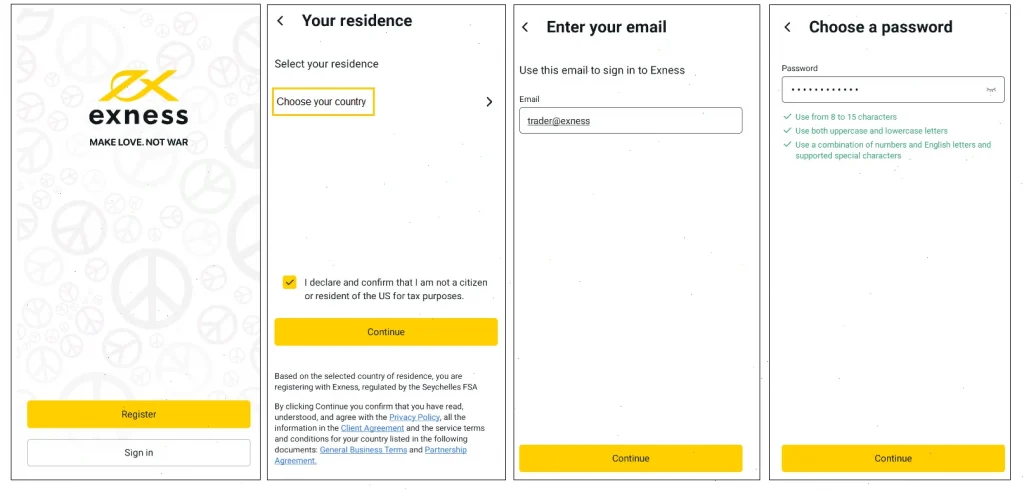
After opening the app, you can either log in or register. Existing users just enter their email and password, while new users complete a short form. The process takes a couple of minutes, including basic verification.
There’s also an option to sign in through Google, which simplifies access. Many traders prefer this, especially when switching devices.
Security can be strengthened with two-factor authentication. This adds an extra step — usually a code from SMS or an authenticator app — but significantly reduces the risk of unauthorized access.
| Login Method | Security Level | Typical Time |
|---|---|---|
| Email + Password | Standard | ~30 sec |
| Google Login | Higher | ~15 sec |
| 2FA Enabled | Strong | ~45 sec setup |
| Biometric | Fast access | Instant |
Biometric login can be activated in settings. In daily use, it saves time — especially if you check positions frequently.
How the Trading Interface Works
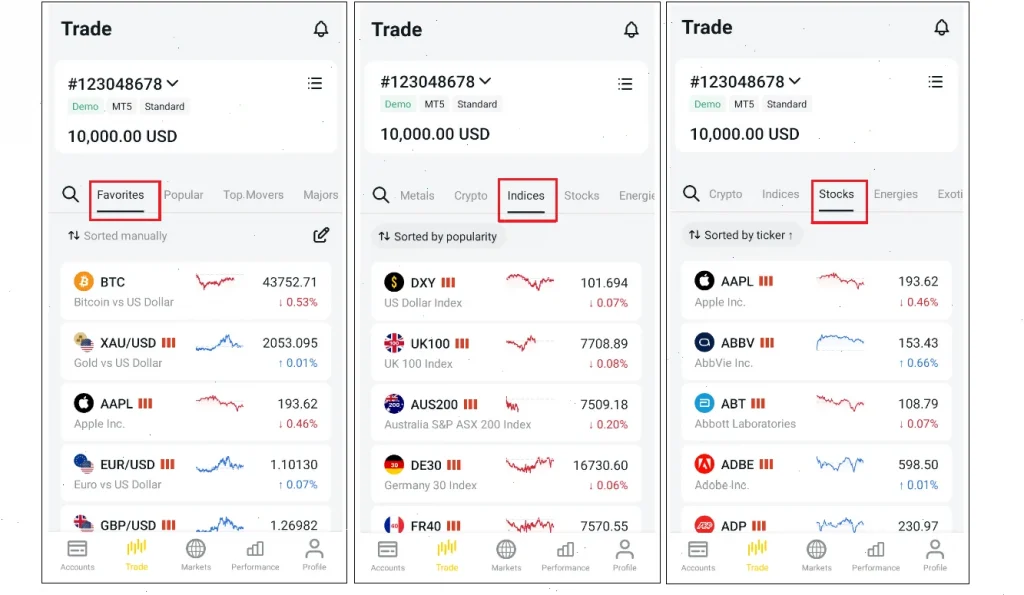
The layout is fairly straightforward. Navigation tabs at the bottom separate markets, trading activity, open positions, and account settings. After a short time, most users move through sections without thinking about it.
The “Markets” tab displays live prices and spreads. There’s a built-in search tool, which is useful when dealing with a large list of assets.
Charts come with multiple formats — candlestick, line, bar — and more than 50 indicators. In practice, this covers most standard analysis needs without requiring external tools.
- Switch between timeframes instantly
- Add indicators like RSI, MACD, moving averages
- Draw trend lines and support levels
Placing Trades and Managing Risk
Opening a trade is simple: select an asset, choose buy or sell, and confirm. The order window shows margin requirements and spread before execution, which helps avoid surprises.
Execution speed is typically very fast — under a millisecond in many cases. While this reduces slippage, it doesn’t eliminate it entirely, especially during high volatility.
Different order types are available, allowing more control over entry and exit points.
| Order Type | Execution | Typical Use |
|---|---|---|
| Market | Instant | Immediate trades |
| Limit | At set price | Planned entry |
| Stop | Triggered level | Breakouts |
| Stop Loss | Automatic close | Risk control |
Stop loss and take profit levels can be adjusted even after opening a trade. Many traders rely on this to manage exposure rather than constantly watching the screen.
Still, it’s worth noting: leverage increases both potential profit and risk. Sudden market moves can trigger margin calls if positions are not managed carefully.
Handling Funds and Account Details
Account data — balance, equity, margin — is accessible from the main menu. Transaction history can be reviewed or exported if needed.
Deposits are often processed instantly, depending on the method. Minimum amounts start low for standard accounts, making it accessible even for smaller balances.
Withdrawals may take longer, typically up to a few business days. Timing depends on the payment provider and verification status.
| Method | Processing Time | Minimum |
|---|---|---|
| Bank Transfer | 1–3 days | $50 |
| Card | Instant | $10 |
| E-wallet | Instant | $10 |
| Crypto | Instant | $20 |
Verification steps are required before withdrawals. While this adds friction, it’s part of standard security practice.
Support and Learning Resources
The app includes a built-in help section with articles and short guides. For more complex issues, support is available via chat or email at any time.
Push notifications keep users updated on account activity and market changes. Some traders rely on these alerts instead of constantly monitoring charts.
There are also educational materials — webinars, market updates, and an economic calendar. These don’t replace experience, but they can help with staying informed about key events.
 FAQ
FAQ
How do I install the Exness iOS app?
Open the App Store, search for “Exness,” verify the developer, and tap “Get.” Installation usually takes a few minutes.
What are the minimum requirements?
You’ll need iOS 12.0 or newer, around 200MB of free space, and a stable internet connection.
Can I use Face ID or Touch ID?
Yes, biometric login can be enabled in the security settings for quicker access.
What trading orders are supported?
The app supports market, limit, stop, stop loss, and take profit orders.
How do deposits work?
Choose a payment method in the app, enter the amount, and confirm. Many options are processed instantly, though availability depends on the provider.