
How to Copy Trade in Exness
Master copy trading with Exness. Follow our step-by-step instructions to start copying successful traders and maximize your profits.
How Copy Trading Actually Works
Copy trading is built around a simple idea: instead of placing trades manually, you follow traders whose strategies are already active. Once connected, your account mirrors their positions automatically, with trade sizes adjusted to your balance. In practice, this means you’re not just watching the market — your account reacts in real time.
Execution speed matters more than most expect. When trades are replicated in under 100 milliseconds, the price difference between the original and copied trade is usually minimal. That keeps results closer to what the strategy provider achieves, although small deviations can still happen during volatile periods.
| Feature | Specification | Details |
|---|---|---|
| Minimum Copy Amount | $10 | Entry level per strategy |
| Maximum Providers | 20 | Active connections at once |
| Execution Speed | <100ms | Typical replication delay |
| Asset Coverage | 200+ | Markets available for copying |
Many traders notice that diversification across asset classes — currencies, indices, crypto — helps smooth out performance swings. Still, copying doesn’t remove risk. If a provider hits a losing streak, your account follows it proportionally.

Opening and Preparing Your Account
Getting started usually begins with a standard registration flow, followed by choosing a copy trading account type. The platform asks for basic personal details and a short questionnaire about trading experience. This isn’t just formality — your answers affect default risk settings.
Verification and Account Setup
Before funding, identity checks are required. You’ll need to upload an ID and confirm your address. In some cases, additional questions about income or trading background appear. Most accounts are verified within a day, though delays can happen if documents aren’t clear.
Funding the Account
The starting deposit is typically around $200. That higher entry level makes sense — spreading funds across multiple strategies reduces dependency on a single trader. Payment options usually include:
- bank transfers
- cards
- digital wallets
- crypto payments
Processing time varies. Card deposits tend to be instant, while bank transfers may take longer. Currency conversion happens automatically, which is convenient but may include small conversion costs.
Choosing Traders to Follow
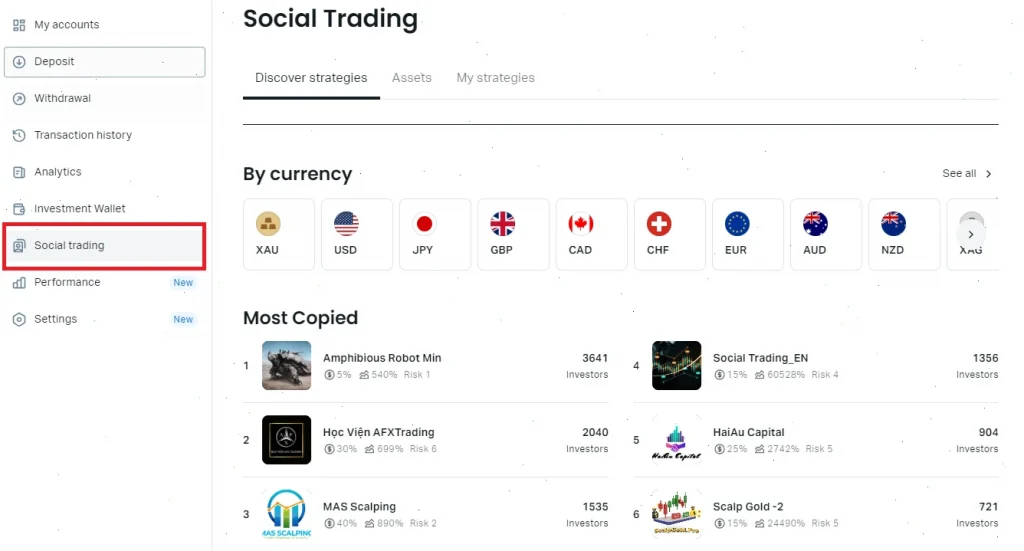
The selection stage is where most outcomes are decided. Platforms typically list hundreds of strategy providers, each with public statistics. At first glance, high returns look attractive, but experienced users tend to focus more on consistency and drawdowns.
What to Look At
A few metrics matter more than others:
- Drawdown — shows how deep losses went
- Win rate — percentage of profitable trades
- Trade duration — short-term vs longer positions
For example, a provider with 15% monthly returns but 40% drawdown may feel unstable in practice. Meanwhile, steady 5–7% with controlled losses often proves easier to stick with.
Risk Breakdown
| Risk Level | Drawdown Range | Suggested Allocation | Experience Level |
|---|---|---|---|
| Low | 0–10% | Up to 40% | Beginner-friendly |
| Medium | 10–20% | Up to 30% | Some experience |
| High | 20%+ | Up to 20% | Advanced users |
It’s common to combine several providers instead of relying on one. That way, a weak period from one strategy doesn’t dominate the entire account.
Setting Up Your Copy Strategy
After selecting providers, you decide how much capital to allocate. Typical allocations range from $50 to several thousand per strategy. Many users split funds across 3–7 providers to avoid concentration.
Risk Controls
Risk settings are not something to skip. You can define:
- maximum trade size
- daily or weekly loss limits
- automatic stop copying if losses exceed a threshold
In practice, these limits act as a safety net. Without them, one aggressive strategy can impact the entire balance faster than expected.
Diversification Approach
Combining different trading styles helps reduce overlap. For instance:
- one short-term scalper
- one swing trader
- one focused on crypto or indices
Low correlation between strategies (below ~0.3) is often seen as a healthier mix, since positions don’t move in the same direction all the time.
Tracking Performance Over Time
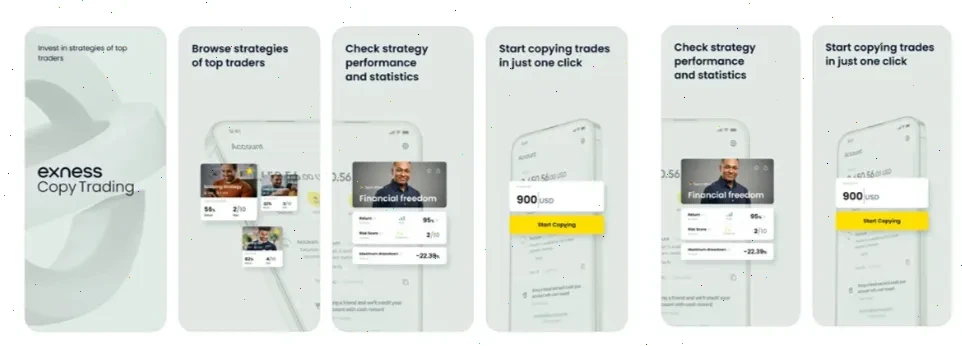
Once copying is active, monitoring becomes part of the routine. Most dashboards update every few seconds, showing open trades, profit/loss, and individual provider results.
Mobile access is widely used. Many traders check performance briefly throughout the day rather than staying constantly connected.
What Metrics Matter
Instead of focusing only on profit, it helps to track:
- overall return vs risk taken
- drawdown recovery time
- performance consistency month-to-month
A strategy that recovers quickly after losses tends to feel more stable, even if returns are slightly lower.
Advanced Features Worth Knowing
Some tools go beyond simple copying. For example, proportional copying adjusts trade size automatically, while partial copying lets you follow only certain types of trades.
There’s also reverse copying — essentially doing the opposite of a provider’s trades. It’s less common, but some traders experiment with it in specific market conditions.
Rebalancing Your Portfolio
| Type | Frequency | Trigger | Use Case |
|---|---|---|---|
| Scheduled | Monthly | Time-based | Stable portfolios |
| Dynamic | Flexible | ±5% drift | Active adjustments |
| Volatility-based | Weekly | Market changes | Risk-focused setups |
Rebalancing helps keep your allocations aligned. Without it, one successful provider can slowly dominate the portfolio, increasing risk unintentionally.
Security and Account Protection
Security is usually handled through encrypted connections and additional login steps like two-factor authentication. Funds are stored separately from company operations, which reduces exposure to operational risks.
Another important detail is negative balance protection. In fast-moving markets, losses can exceed deposits, but this feature prevents accounts from going below zero.
Privacy Considerations
Users can control how much of their trading data is visible. Provider statistics are typically anonymized, which keeps performance transparent without exposing personal details.
Improving Long-Term Results
Copy trading isn’t fully passive, even though it may look that way at first. Results improve when you review your setup regularly and make small adjustments instead of reacting to every short-term change.
A few habits tend to help:
- review providers every few months
- remove consistently underperforming strategies
- avoid chasing recent high returns
Many traders learn this the hard way — switching too often often leads to worse outcomes than sticking with a well-balanced setup.
| Step | What to Do | Why It Matters |
|---|---|---|
| Research | Check risk and consistency | Better selection |
| Review | Analyze performance quarterly | Spot issues early |
| Risk Control | Use limits and diversification | Protect capital |
| Learning | Follow market insights | Improve decisions |
 FAQ
FAQ
How do I start copy trading?
Create an account, complete verification, deposit funds, and choose traders to follow. Once connected, trades are copied automatically.
What’s the minimum to begin?
You can start copying from $10 per strategy, though a higher total balance is usually needed for proper diversification.
Can I limit risk?
Yes, you can set loss limits, adjust trade sizes, and stop copying at any time.
Is mobile access available?
Most platforms offer full mobile functionality, including monitoring and adjusting settings.
Are funds protected?
Funds are typically stored separately and supported by risk protection mechanisms, but trading losses are still possible.