
High-Frequency Trading on Exness
Explore how Exness supports high-frequency trading with fast execution, advanced accounts, and technical tools tailored for traders.
High-Frequency Trading: How It Works in Practice
High-frequency trading (HFT) relies on speed more than anything else. On platforms like Exness, traders use automated systems to place a large number of orders within seconds. The idea isn’t to hold positions for long — sometimes trades last only milliseconds — but to capture small price movements repeatedly.
In real conditions, execution speed and spreads matter more than strategy complexity. Many traders notice that even a difference of 0.05 seconds can affect outcomes when running scalping bots. That’s why platforms supporting MetaTrader 4 and MetaTrader 5 are often used — they allow automated scripts (EAs) to run continuously with minimal manual input.
| Account Type | Typical Spread | Execution Speed | Commission |
|---|---|---|---|
| Standard | From 0.3 pips | ~0.1 sec | No |
| Pro | From 0.1 pips | ~0.05 sec | No |
| Raw Spread | From 0.0 pips | ~0.03 sec | $3.50 per lot |
What You Actually Need to Run HFT
Connection and Server Setup
A stable connection is non-negotiable. Most active traders end up using a VPS because running algorithms on a home PC often leads to interruptions — power cuts, system updates, or unstable internet can all interfere.
With a properly configured VPS, latency can drop to just a few milliseconds. In practice, this means orders reach the market faster, reducing slippage during volatile moments.
Platform Capabilities
Both MT4 and MT5 support automated trading via MQL scripts. One interesting detail: these platforms can handle hundreds of open trades at once without slowing down, which is essential for strategies that scale positions quickly.
For more advanced setups, API access is sometimes used. It’s less common among retail traders but allows direct communication with the trading server — useful if you’re building custom execution systems.
Available Markets
HFT strategies tend to focus on instruments with tight spreads and high liquidity:
- Major currency pairs
- Index CFDs
- Commodities like gold
- Some crypto pairs (especially outside weekday sessions)
The key here isn’t variety — it’s consistency. Traders often stick to a small set of instruments where execution remains predictable.
Choosing the Right Account for Fast Strategies
Raw Spread Setup
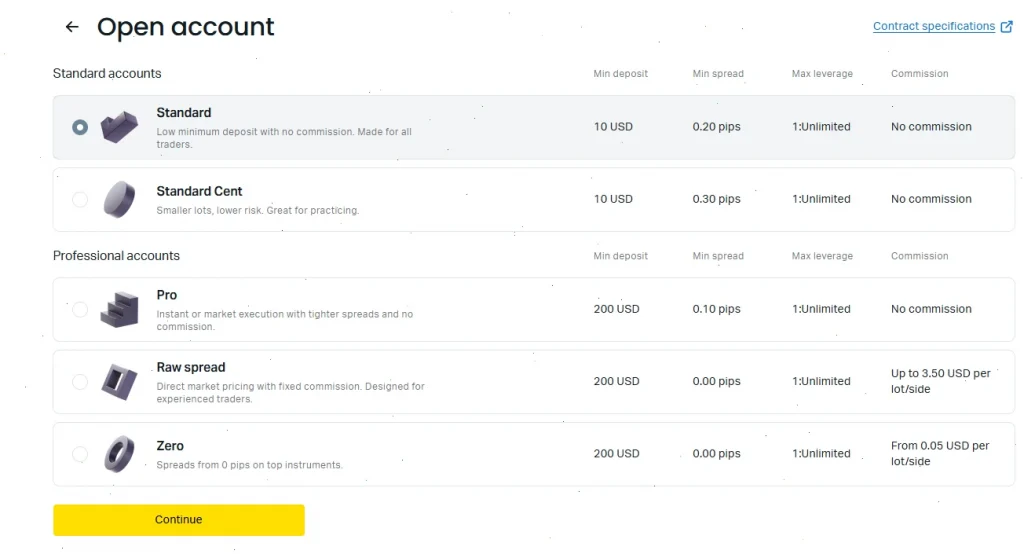
This option is often used for algorithmic trading. Spreads can drop to 0.0 pips during active hours, but there’s a fixed commission per trade. For frequent trading, this structure is easier to calculate — you know exactly what each position costs.
Execution speed around 0.03 seconds makes a noticeable difference when running multiple trades per minute.
Pro Accounts
Pro accounts sit somewhere in between. Spreads are slightly wider than raw accounts, but there’s no commission. Some traders prefer this if they don’t want to track fees separately.
Standard Accounts
For testing or early-stage automation, standard accounts are often enough. The absence of commission simplifies things, though spreads are wider — which can limit certain HFT strategies.
Execution and Latency: What Makes a Difference
Order execution isn’t just about speed — it’s also about consistency. A system might execute in 0.03 seconds on average, but what matters is how it performs during volatility.
In real trading:
- Orders are routed through multiple liquidity providers
- Large trades may be split into smaller fills
- Slippage can occur, especially during news releases
Most traders notice that stable execution is more valuable than occasional ultra-fast fills. Even small delays can affect strategies that rely on tight entry and exit points.
- Average execution: ~0.03 sec
- Order rejection: below 0.01%
- Minimum trade size: 0.01 lot
- Maximum: up to 200 lots
Automation and System Integration
Expert Advisors
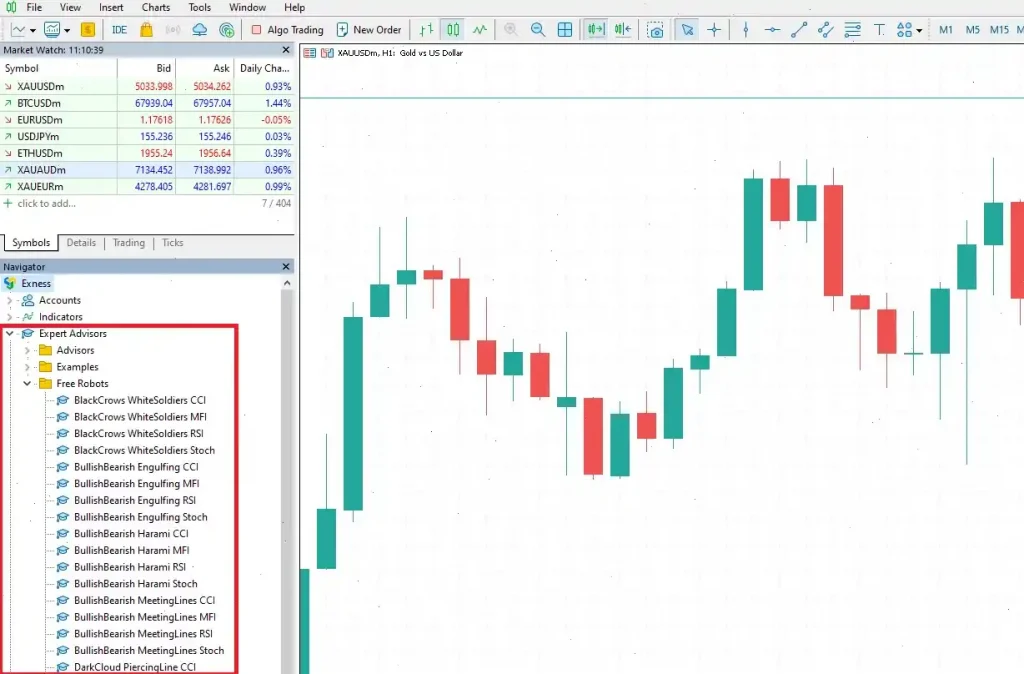
Automated trading runs through Expert Advisors (EAs). You can run several at the same time, each handling its own logic. On a properly configured VPS, they operate 24/7 without manual oversight.
Backtesting tools help evaluate performance before going live, though results don’t always match real conditions — spreads and slippage can change outcomes.
API and Advanced Access
For more technical setups, API connections allow faster data exchange. FIX protocol, for example, can reduce latency significantly compared to standard platforms.
| Feature | Standard API | FIX | WebSocket |
|---|---|---|---|
| Latency | ~50 ms | ~5 ms | ~10 ms |
| Requests/sec | 100 | 1000 | 500 |
| Connections | 5 | 50 | 20 |
Copy Trading
Some traders prefer copying signals instead of building strategies from scratch. Risk can be adjusted manually — for example, reducing position size relative to the original strategy.
Managing Risk in Fast Trading Environments
Position Control
With multiple trades running at once, exposure can build up quickly. Platforms track margin levels in real time and may close positions automatically if risk becomes too high.
Stop-Loss Behavior
Stop-loss and take-profit orders are executed automatically, but during extreme volatility they may not always fill at the exact requested price. This is something many traders underestimate when testing strategies.
Compliance and Security
Accounts are typically verified using ID and basic documentation. Funds are stored separately from company operations, which reduces counterparty risk. Regular transaction logs also help with tracking performance and reporting.
Market Timing and Liquidity Patterns
Trading conditions change throughout the day. Liquidity tends to increase when major sessions overlap, which usually results in tighter spreads and faster execution.
- High activity period 1: late morning to evening
- High activity period 2: afternoon to late night
- Lower activity: early morning hours
During economic announcements, spreads often widen. Even if execution remains fast, price jumps can impact results — especially for scalping systems.
Getting Started Without Overcomplicating It
Opening an Account
The process usually involves verifying identity and adding a payment method. Deposits can be made through bank cards, transfers, or e-wallets. Processing times vary but are often completed within a few days.
Setting Up the Platform
MT4 or MT5 can be installed on desktop or mobile. For automated trading, desktop with VPS is more reliable. Mobile apps are mostly used for monitoring rather than execution.
Testing Strategies
Before trading live, strategies are typically tested in three stages:
| Method | Conditions | Duration | Cost |
|---|---|---|---|
| Backtesting | Historical data | Flexible | Free |
| Demo trading | Real-time simulation | ~30 days | Free |
| Live trading | Actual market | Ongoing | Spreads/fees |
Skipping testing is where many run into trouble. Even strategies that look solid on historical data can behave differently once real spreads and execution delays come into play.
 FAQ
FAQ
Is high-frequency trading allowed on Exness?
Yes, automated and high-frequency strategies are supported, including the use of Expert Advisors on MT4 and MT5.
What setup is typically used for HFT?
Most traders use a VPS with stable low-latency connection and run automated scripts continuously.
How fast is execution?
Execution can reach around 0.03 seconds under normal conditions, though it may vary during volatile periods.
Can automated bots run 24/7?
Yes, especially when hosted on a VPS, which avoids interruptions from local devices.
What risks should be considered?
Slippage, spread widening, and execution delays during news events can all impact performance, even with fast systems.