
Trade Apple Stock with Exness Platform
Trade Apple stock with Exness platform. Access real-time quotes, advanced charts, and professional tools for AAPL trading success.
Getting Started with Apple (AAPL) Trading via CFDs
Trading Apple stock (AAPL) through CFDs works a bit differently from buying shares outright. You’re not owning the stock itself — instead, you’re speculating on price movements. In practice, this makes it easier to enter positions with smaller amounts and adjust exposure more flexibly.
To begin, a verified account is required. The entry threshold is relatively low (from $10), which many traders use to test strategies before scaling up. Platforms like MT4, MT5, or a browser-based terminal are typically available, depending on how you prefer to trade.
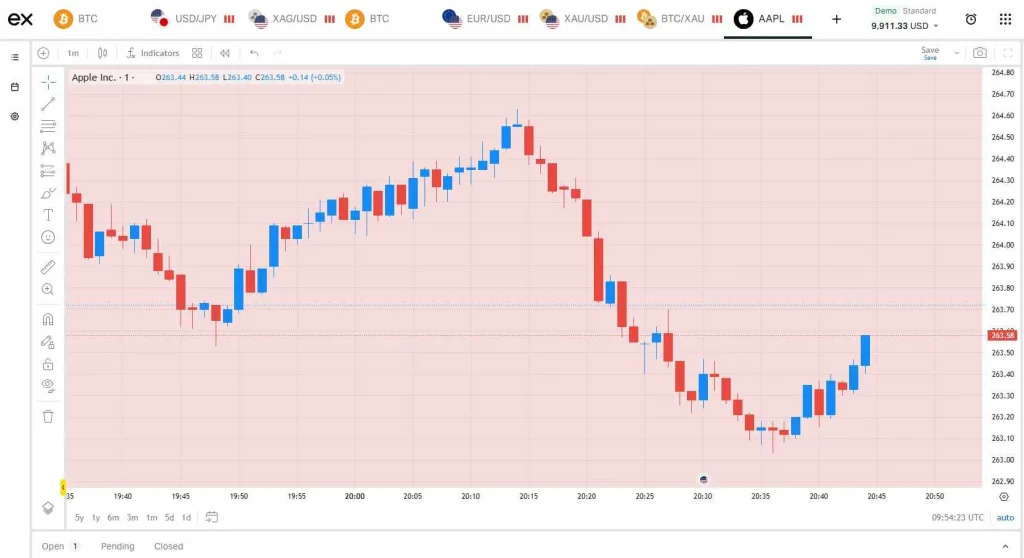
AAPL remains one of the most actively traded equities globally. That shows up in tight pricing and consistent liquidity, especially during core market hours (usually 14:30–21:00 GMT). Fractional trading is supported, meaning positions can start from 0.01 lots — useful if you’re managing risk carefully or testing short-term setups.
| Feature | Specification | What It Means in Practice |
|---|---|---|
| Minimum Position | 0.01 lots | Allows small, controlled trades |
| Leverage | Up to 1:20 | Amplifies exposure but increases risk |
| Execution Speed | < 0.1 sec | Important during volatile price moves |
| Spread | From ~0.02% | Lower costs on frequent trades |
Setting Up a Trading Account
Before accessing stock CFDs, identity verification is required. The process is fairly standard: basic personal details, followed by document upload. Most accounts are reviewed within a day, though it can take longer if documents aren’t clear.
There are usually two main account types — one more suited for casual trading, another for higher volumes with tighter pricing. The choice depends less on “experience level” and more on how often and how large you plan to trade.
Verification: What’s Needed
You’ll typically need:
- A valid ID (passport, driver’s license, or similar)
- Proof of address issued within the last 3 months
- A short questionnaire about trading experience
Uploading is done through a dashboard. Clear photos matter — blurry uploads tend to slow things down. Once approved, trading access is unlocked immediately.
Choosing a Platform That Fits
There isn’t a single “right” platform — it depends on how you trade.
MT4 is still widely used for its simplicity. It handles basic charting and order execution without much clutter.
MT5 adds more depth: additional order types, market depth tools, and integrated news.
The web terminal runs in a browser, which many people prefer when switching between devices.
Quick Setup (MT4/MT5)
After installation:
- Log in using your account credentials
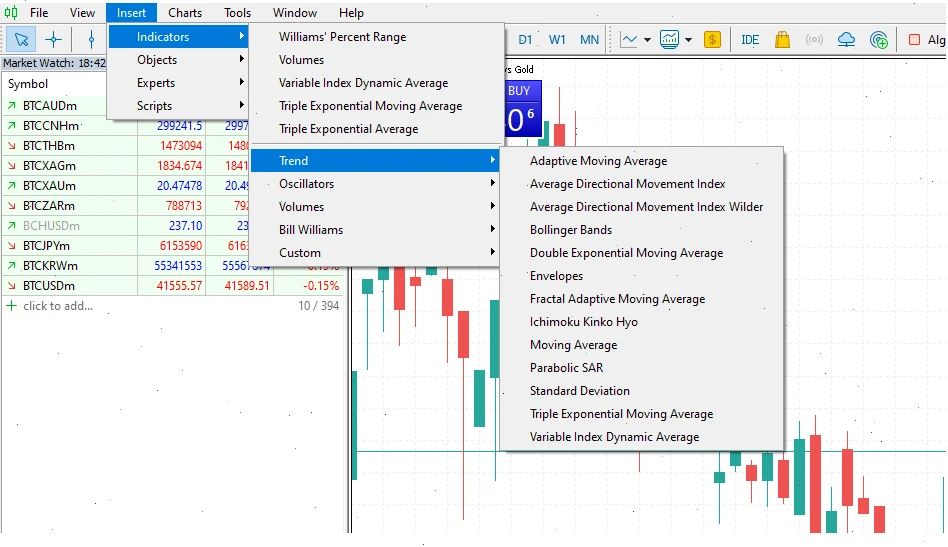
- Open “Market Watch” and search for AAPL
- Add it to your list for quick access
Timeframes range from 1-minute charts to monthly views, which covers everything from scalping to longer-term analysis.
Trading in the Browser
The web platform doesn’t require installation. It syncs automatically, so positions and charts look the same whether you log in from a laptop or phone. That’s convenient if you check trades throughout the day rather than sitting at one screen.
Tools for Analyzing Apple Stock
Most platforms include a mix of technical and fundamental tools. The idea isn’t to use everything at once — it’s more about finding a combination that actually makes sense for your approach.
Charting and Indicators
Common tools include:
- Moving averages (trend direction)
- RSI (overbought/oversold zones)
- MACD (momentum shifts)
Many traders end up sticking to just a few indicators. Too many signals can conflict and make decisions harder, not easier.
Historical data often goes back around 10 years, which is enough for backtesting basic strategies.
Fundamental Data
Alongside charts, you’ll usually see:
- Quarterly earnings reports
- Revenue breakdowns (products vs services)
- News updates and analyst expectations
In practice, big price moves often happen around earnings releases. Even traders who rely on charts tend to keep an eye on those dates.
| Data Type | Update Frequency | Why It Matters |
|---|---|---|
| Price Data | Real-time | Accurate entries and exits |
| Financial Reports | Quarterly | Longer-term direction |
| News | Continuous | Short-term volatility |
| Analyst Views | Daily | Market sentiment context |
Order Types Explained (Without the Jargon)
Different order types exist mainly to control when and how you enter a trade.
- Market orders — executed instantly at the current price
- Limit orders — placed at a specific price level
- Stop orders — triggered once price reaches a threshold
Execution speed (often under 0.1 seconds) matters most during volatile periods — for example, right after major announcements.
One detail worth noting: price slippage can still occur in fast markets. It doesn’t happen often, but it’s something many traders notice when trading during news spikes.
Managing Risk (This Part Matters More Than Strategy)
It’s easy to focus on entries, but risk management usually decides long-term results.
A common approach:
- Risk no more than 1–2% of account balance per trade
- Always set a stop loss
- Aim for at least a 1:2 risk-to-reward ratio
With leverage up to 1:20, even small price moves can have a noticeable impact. That’s helpful — but also the main reason losses can grow quickly if unmanaged.
Stops and Position Size
Stop losses are typically placed near support or resistance levels. In practice, too tight stops get triggered easily, while overly wide ones increase risk — it’s a balance you refine over time.
Margin Basics
Opening a position requires about 5% margin. If the account equity drops too low, positions may be closed automatically.
Many traders only really understand margin after experiencing a margin call once — not ideal, but common.
How Traders Approach AAPL
There’s no single strategy that works for everyone, but a few patterns show up often.
Short-Term Trading
Active traders focus on the first hour after the market opens — that’s when volatility tends to peak. Moves can be sharp, but also unpredictable.
Typical setup:
- 5–15 minute charts
- Quick entries and exits
- Smaller profit targets
Medium-Term (Swing Trading)
This approach looks at daily charts and holds positions for several days.
Common ideas:
- Buying pullbacks in an uptrend
- Watching key moving averages
- Aligning with broader index direction
| Style | Timeframe | Typical Risk | Trade Goal |
|---|---|---|---|
| Scalping | Minutes | High | Small, frequent gains |
| Intraday | Hours | Medium | Capture daily moves |
| Swing | Days | Moderate | Follow short trends |
| Position | Weeks+ | Lower | Longer-term growth |
Advanced Features (Optional, but Useful)
Some traders go beyond manual trading.
- Automated strategies (EAs) — run predefined rules
- VPS hosting — keeps systems running 24/7
- Copy trading — mirrors other traders’ positions
Automation can remove emotional decisions, but it doesn’t remove risk. Strategies still need monitoring — markets change, and what worked last month may not work now.
Copy trading is often used by beginners, though results vary widely depending on who you follow.
Withdrawals and Account Control
Withdrawals are usually processed within a day after approval. Available methods often include bank transfers, e-wallets, and digital assets.
Minimum withdrawal amounts depend on the method (typically $10–$50).
A few practical points:
- Larger withdrawals may require additional verification
- Processing times vary depending on the payment system
- Account history and reports are accessible anytime
Funds are generally held separately from operational accounts, and negative balance protection is standard — meaning losses won’t exceed your deposit.
 FAQ
FAQ
How do I start trading Apple (AAPL)?
After registration and verification, fund your account, choose a platform, and add AAPL to your trading list.
Is leverage available?
Yes, up to 1:20 for stock CFDs. It increases exposure but also risk.
Can trading be automated?
Yes, automated strategies can run on supported platforms using built-in tools or external scripts.
How long do withdrawals take?
Most requests are processed within 24 hours, though final timing depends on the payment provider.
Can I trade small amounts?
Yes, positions can start from 0.01 lots, which helps manage risk more precisely.