
Best Forex Broker for Copy Trading
Access professional forex copy trading with Exness. Start with $10 minimum deposit, leverage up to 1:2000, and copy expert traders.
How Copy Trading Works in Practice
Copy trading is essentially a way to mirror someone else’s trading activity without placing each trade manually. Once connected to a strategy provider, trades are copied into your account automatically, scaled to your balance. That scaling matters — a trader opening a large position won’t expose your account to the same absolute risk, only a proportional one.
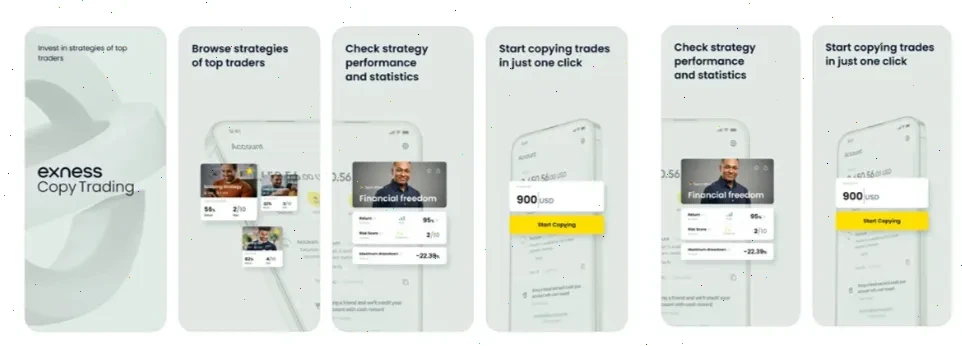
On platforms like :contentReference[oaicite:0]{index=0}, users can browse through hundreds of active strategy providers. Each profile includes performance history, drawdown levels, and risk indicators. In reality, many traders focus less on raw returns and more on consistency — a provider with moderate but stable results often attracts more followers than one with sharp gains and equally sharp losses.
| Feature | Specification | What It Means |
|---|---|---|
| Minimum Copy Amount | $10 | Low entry threshold for testing strategies |
| Maximum Leverage | Up to 1:2000 | Allows larger exposure, but increases risk significantly |
| Execution Speed | <100 ms | Helps reduce price differences between provider and follower |
| Active Strategies | 500+ | Wide range of trading styles and risk levels |
Execution speed below 100 milliseconds usually keeps slippage low, though it’s never completely avoidable during volatile market conditions. In practice, this becomes noticeable during major news events when prices move quickly.
Getting Started: Account Setup
Opening an account is fairly straightforward. You provide an email, create a password, and confirm your identity. The verification step is more important than it might seem — without it, withdrawals are typically restricted.
Verification Details
You’ll need to upload a clear ID and a document confirming your address, such as a recent bill or statement. Most checks are completed within a day, although delays can happen if images are unclear or cropped.
Choosing an Account Type
There are usually two main options:
- Standard account – spreads from around 0.3 pips, no direct commission
- Pro account – spreads can drop to 0.0 pips, with a commission near $3.50 per lot
In practice, the difference shows up in active trading. Lower spreads can reduce costs if trades are frequent, while commission-based accounts tend to appeal to more experienced users.
Inside the Platform Interface
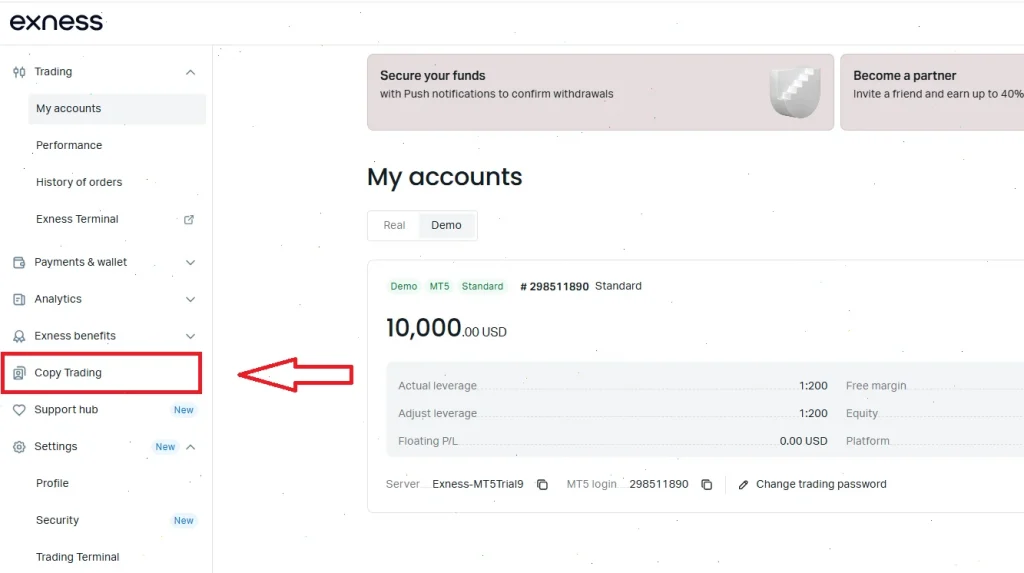
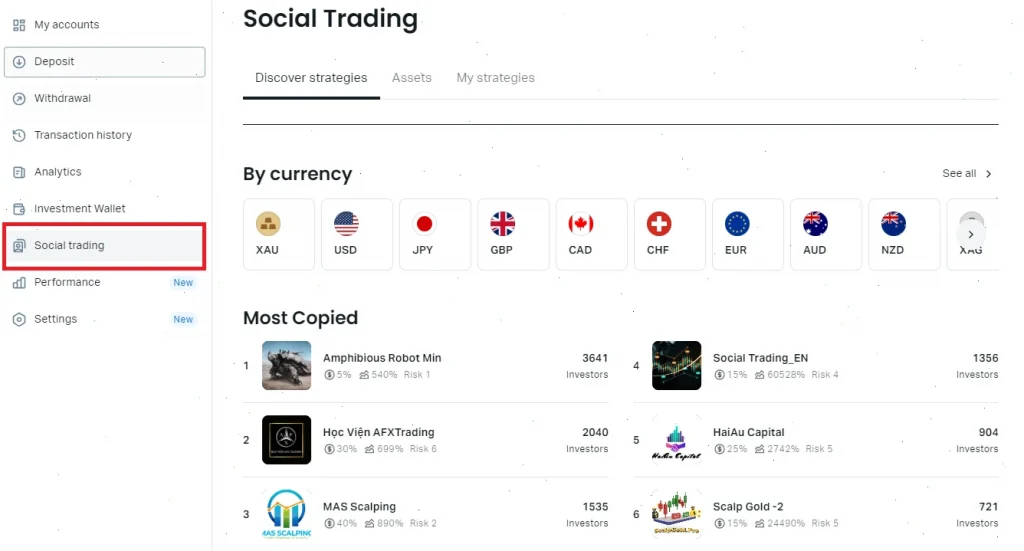
The dashboard is built around monitoring rather than manual trading. You’ll see active strategies, current positions, and overall performance at a glance. It’s not overloaded, but there’s enough detail to understand what’s happening without digging through multiple menus.
Finding Strategy Providers
Filtering tools help narrow things down. You can sort by:
- Historical returns
- Maximum drawdown
- Preferred markets (forex, crypto, indices)
One thing many users overlook is trade duration. A strategy holding positions for minutes behaves very differently from one holding for days, even if returns look similar.
Managing Allocations
Funds can be split between several providers. For example, instead of allocating 100% to one trader, many users divide capital across 3–5 strategies. This reduces dependency on a single approach, especially if market conditions shift.
Setting Up Copy Trading
Starting is less about clicking a button and more about choosing wisely. The setup process typically follows a simple flow, but the decisions behind it matter.
- Review provider statistics and trading history
- Check drawdowns — not just profits
- Select strategies that match your risk comfort
- Assign a percentage of your balance
- Activate copying
Once active, trades are mirrored automatically. You’ll see each position in your account almost instantly after it’s opened by the provider. Still, results won’t be identical due to slight execution differences.
Risk Controls That Actually Matter
Risk management tools are built into the system, but they only help if used properly. Many new users leave default settings unchanged, which isn’t always ideal.
Automatic Protection Features
You can set limits that trigger actions regardless of what the provider does. For example, if losses reach a certain level, positions close automatically.
| Parameter | Typical Default | Adjustable Range |
|---|---|---|
| Max Position Size | 5% | 1% – 10% |
| Daily Loss Limit | 10% | 5% – 20% |
| Drawdown Limit | 15% | 10% – 25% |
| Emergency Stop | 20% | 10% – 30% |
In real conditions, drawdown limits are often the most important. A strategy can show strong long-term returns but still go through deep temporary losses — something not everyone is comfortable with.
Diversification
Spreading funds across different strategies reduces risk. Combining short-term and long-term approaches, or mixing asset classes, can smooth out performance fluctuations. It’s not a guarantee, but it usually makes results less volatile.
Tracking Results and Understanding Metrics
Performance tracking goes beyond just profit and loss. The platform provides a breakdown that helps you understand where returns come from — and what risks were taken to achieve them.
Key Metrics Explained
Instead of focusing only on returns, many experienced users look at risk-adjusted metrics.
| Metric | Explanation |
|---|---|
| Absolute Return | Total profit or loss over time |
| Sharpe Ratio | Return relative to volatility |
| Max Drawdown | Largest drop from peak balance |
| Value-at-Risk | Estimated potential loss in worst-case scenarios |
For example, two strategies might deliver the same return, but one does it with smaller fluctuations. That difference becomes clear when looking at Sharpe ratio or drawdown figures.
Deposits and Withdrawals
Funding the account is flexible, with several payment methods available. The minimum deposit is typically around $10, which makes testing the platform relatively accessible.
- Select a payment option
- Enter the amount
- Confirm the transaction
- Wait for processing
Processing times vary:
| Method | Min Deposit | Processing Time | Withdrawal Speed |
|---|---|---|---|
| Bank Transfer | $10 | 1–3 days | 1–3 days |
| Card | $10 | Instant | 1–3 days |
| E-wallet | $10 | Instant | Instant |
| Crypto | $10 | ~30 minutes | ~30 minutes |
In practice, electronic methods are noticeably faster, especially for withdrawals. Bank transfers, while reliable, tend to take longer due to processing steps outside the platform’s control.
Support and Learning Resources
Support is available around the clock through chat, email, and phone. Response times are usually quick, particularly for basic account or technical questions.
Learning Materials
There’s a mix of written guides, short videos, and occasional webinars. Topics range from basic platform navigation to more advanced ideas like portfolio balance and trading psychology.
Knowledge Base
The FAQ section covers common issues — login problems, verification delays, and transaction questions. It’s often faster to check there first before contacting support.
Advanced Topics
Some materials go deeper into risk and strategy evaluation. These are useful if you plan to actively manage your portfolio rather than just follow one provider and leave it running.
| Support Channel | Availability | Languages |
|---|---|---|
| Live Chat | 24/7 | Multiple |
| 24/7 | Multiple | |
| Phone | 24/7 | Multiple |
 FAQ
FAQ
What is the minimum amount to start?
You can begin with around $10, which is enough to test how copy trading works without committing a large balance.
How long does verification take?
Usually within a day, assuming documents are clear and valid.
Can I limit risk on copied trades?
Yes, you can set loss limits and exposure caps independently from the strategy provider.
Which payment methods are supported?
Bank transfers, cards, e-wallets, and crypto are commonly available, each with different processing speeds.
How do I track performance?
Through the dashboard, which shows returns, drawdowns, and detailed trade history in real time.