
Exness Multi-Asset Trading Overview
Access comprehensive multi-asset trading with Exness platform. Trade forex, commodities, indices with advanced tools and competitive spreads.
Exness Multi-Asset Platform Overview
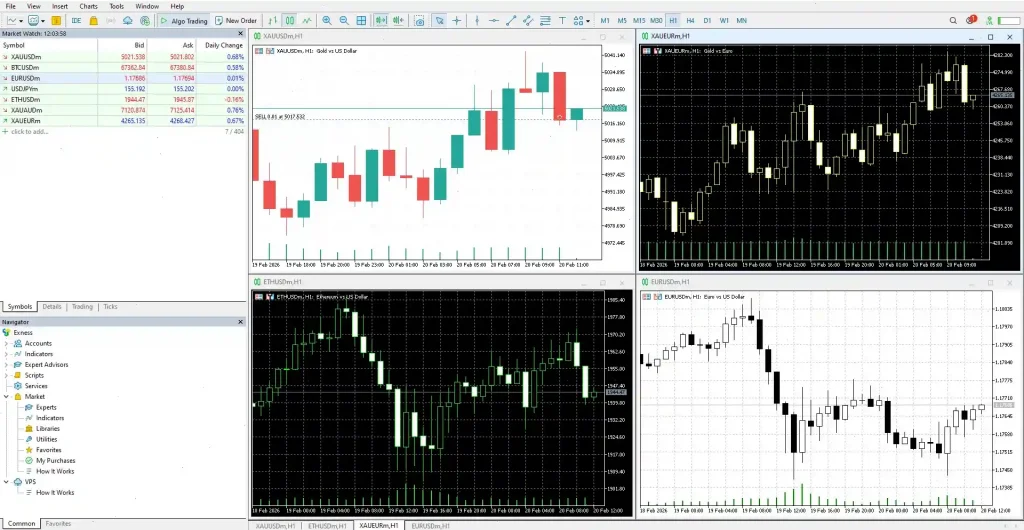
Trading on Exness usually revolves around flexibility. Instead of switching between multiple services, everything sits inside one ecosystem — currencies, commodities, indices, and crypto instruments are all accessible from a single account. For many traders, that simply means fewer interruptions and faster decision-making.
The platform works through MetaTrader 4, MetaTrader 5, and a browser-based terminal. Execution is generally quick — often measured in milliseconds under normal conditions — which matters if you’re entering trades during volatile sessions. In practice, even small delays can shift entry prices, so this speed isn’t just a technical detail.
| Asset Class | Instruments | Typical Spread From | Max Leverage |
|---|---|---|---|
| Forex | 120+ pairs | 0.0 pips | Up to 1:2000 |
| Commodities | 30+ contracts | 0.1 pips | Up to 1:400 |
| Indices | 15 indices | 0.4 points | Up to 1:200 |
| Crypto | 12 pairs | 0.05% | Up to 1:50 |
Charts update in real time, with a decent range of indicators already built in. For someone trading actively, that removes the need for extra tools. The infrastructure behind it — including multiple data centers — is designed to keep the system stable even during high traffic.
Account Types and Trading Conditions
Account choice here isn’t just about deposit size — it changes how costs are structured. Some traders prefer paying spreads only, others are fine with commissions if it means tighter pricing.
Standard Account
The entry-level option starts from around $10. Spreads on major pairs often begin near 0.3 pips, and there’s no separate commission. That makes it easier to estimate trading costs without extra calculations. Trade sizes start from 0.01 lots, which suits cautious strategies or testing.
Pro and Raw Spread Accounts
More experienced traders often lean toward accounts with tighter spreads. These can start close to 0.1 pips, but include a commission (around $3.50 per lot). In practice, this setup may reduce overall cost for high-volume trading, especially during active market hours.
All accounts include negative balance protection, meaning losses won’t exceed the deposited amount — something many traders only fully appreciate during sharp market moves.
Trading Platforms and Execution
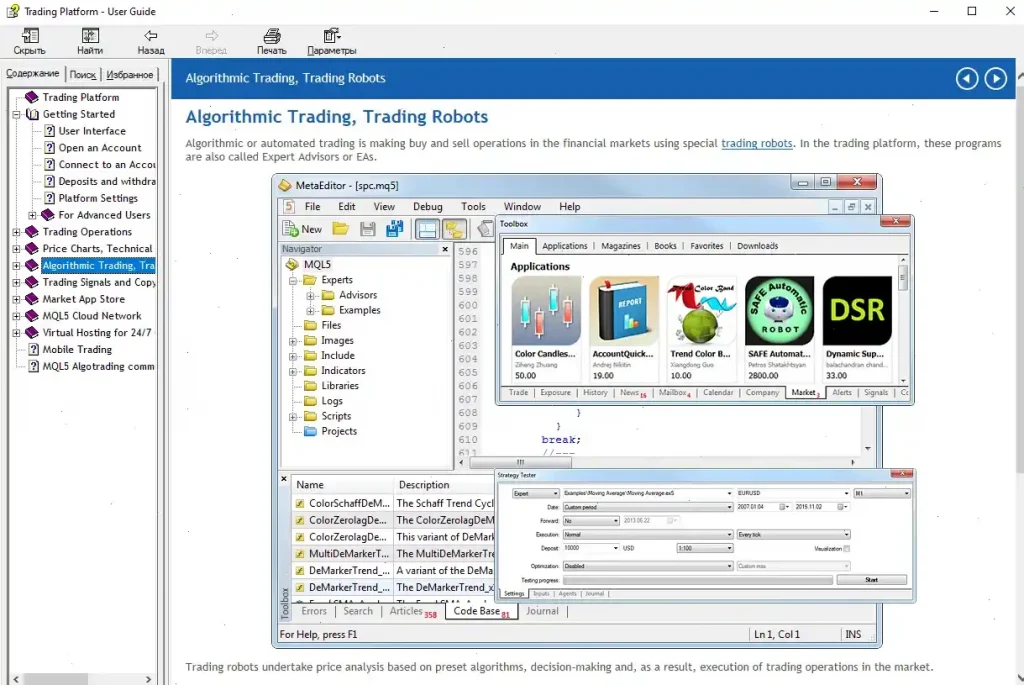
MetaTrader 4 remains widely used for automated trading through Expert Advisors, while MetaTrader 5 adds more timeframes and built-in indicators. The web terminal is simpler — no installation, just login and trade.
Mobile Experience
Mobile apps cover most core features — placing orders, adjusting stops, checking charts. Many traders rely on them for monitoring positions rather than full analysis. Notifications about price levels or margin changes can be useful, especially if you’re not always at your desk.
Execution Model
Orders are processed via a direct market access model, meaning they go straight to liquidity providers. That reduces the chance of price manipulation but doesn’t eliminate slippage entirely — something that tends to appear during major news events.
Markets and Instruments
The range of instruments is broad enough for diversification without being overwhelming. Forex remains the core focus, but other markets are easy to access from the same interface.
Forex Trading
With over 120 pairs, traders can switch between major and less liquid currencies. Spreads typically narrow during peak sessions, which is when most active strategies are executed.
Commodities and Indices
Gold and oil tend to attract attention during uncertain market conditions. Indices, on the other hand, reflect broader market sentiment and are often used for shorter-term trades.
Cryptocurrency pairs are available too, though leverage is lower compared to forex — a reminder that volatility is significantly higher in that segment.
Tools and Analysis
The built-in toolkit covers most everyday needs. You’ll find indicators, drawing tools, and an economic calendar without needing third-party plugins.
| Tool | Purpose | Access |
|---|---|---|
| Indicators | Technical analysis | All accounts |
| Economic Calendar | Track events | All accounts |
| Expert Advisors | Automation | MT4/MT5 |
| Signals | Trade ideas | Selected accounts |
Managing Risk
Stop loss and take profit are standard, but they become essential once leverage is involved. Margin levels update in real time, so traders can see how much room they have before positions are closed automatically.
In practice, even experienced users rely on position sizing tools — not because they can’t calculate manually, but because mistakes happen under pressure.
Deposits and Withdrawals
Funding options are fairly typical: bank transfers, cards, and e-wallets. Instant methods are common with digital wallets, while traditional transfers may take a few business days.
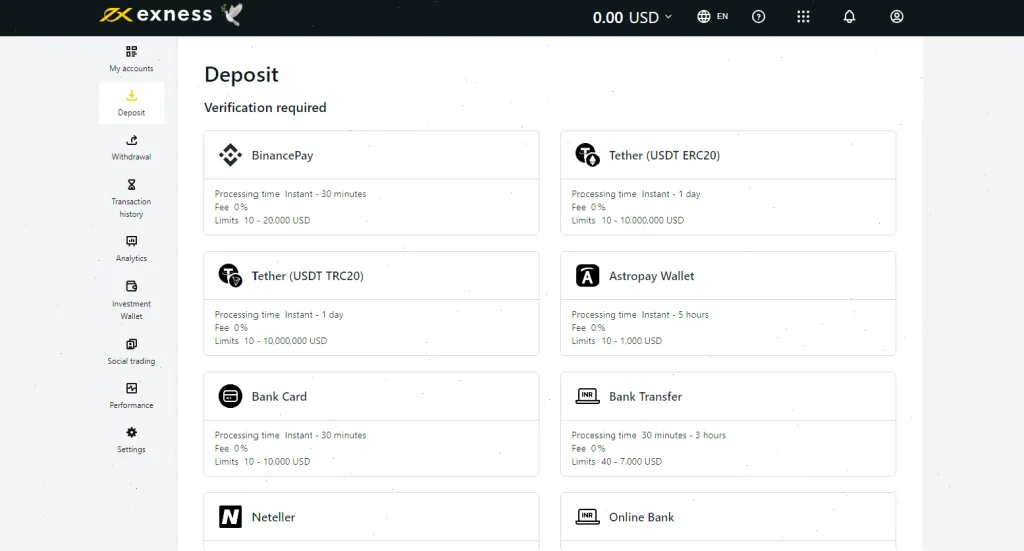
Minimum deposits start low, which lowers the entry barrier. However, many traders eventually increase their balance to access tighter spreads or better execution conditions.
Verification
Account verification requires an ID and proof of address. Approval usually takes less than a day. Once verified, withdrawal limits increase and processing tends to be faster.
| Method | Processing Time | Status |
|---|---|---|
| Bank Transfer | 3–5 days | Available |
| Cards | Instant | Available |
| E-wallets | Instant | Available |
Support and Learning Materials
Support is available through chat, email, and phone. Live chat tends to respond quickly, often within a minute, which can matter if there’s an urgent issue with an open trade.
Educational content includes videos and webinars. Beginners often start there, while more experienced traders usually focus on market analysis updates instead.
| Channel | Availability | Response |
|---|---|---|
| Live Chat | 24/5 | Fast |
| 24/7 | Few hours | |
| Phone | 24/5 | Immediate |
Security and Operational Standards
Security is handled through encryption, two-factor authentication, and segregated accounts. In simple terms, client funds are kept separate from operational funds, which reduces risk in case of internal issues.
There are also monitoring systems that flag unusual account activity. While these systems aren’t always visible, they play a role in preventing unauthorized access.
Still, it’s worth remembering that trading itself carries risk. Leverage can amplify both profits and losses, and market gaps can occur without warning — especially outside peak hours.
Overall, the platform focuses on combining speed, flexibility, and access to multiple markets. Whether that suits a particular trading style depends less on features and more on how those features are actually used day to day.
 FAQ
FAQ
How do I start trading on Exness?
Create an account, verify your identity, and deposit funds using a supported method. After that, you can access the trading platform and begin placing orders.
What leverage is available?
Leverage can reach up to 1:2000 on certain instruments, though it varies depending on account type and market conditions.
Can I use automated trading?
Yes, automated strategies can be run through MetaTrader platforms using Expert Advisors. Setup usually involves installing the software and configuring the trading parameters.